Wear-Resistant Pipe Selection Material Analysis and Overseas Project Application Guide for Mining and Industrial Projects
Wear-Resistant Pipe Selection, Material Analysis and Overseas Project Application Guide for Mining and Industrial Projects
After 11 years of overseeing industrial pipeline projects across Southeast Asia, the Middle East, and East Asia, I’ve seen countless profitable mining, cement, and chemical projects lose budget and timeline due to poorly matched wear-resistant pipe solutions. Most B2B procurement teams focus only on initial pipe prices instead of on-site工况 adaptability, leading to frequent pipe abrasion, blockage, and premature replacement. A qualified wear-resistant pipe is not just a standard industrial component but a customized system that adapts to local climate, medium characteristics, and construction standards. In this guide, I share practical field experience, material selection logic, cross-regional procurement pitfalls, and on-site maintenance tips tailored for global industrial project owners and procurement managers.1. Core Application Value of Wear-Resistant Pipe in Global Industrial Scenarios
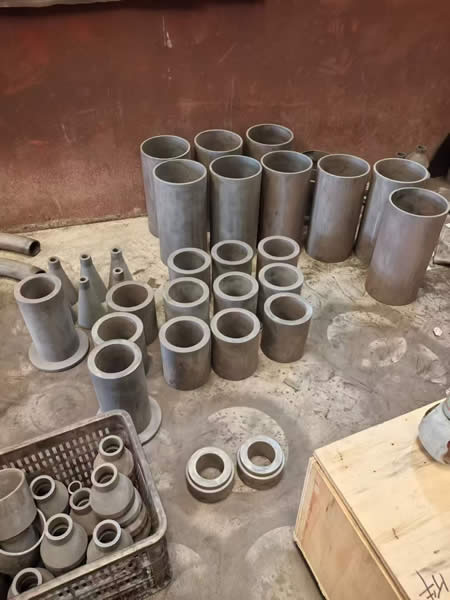
A wear-resistant pipe is a specialized pipeline component designed to resist solid particle abrasion, slurry impact, and medium corrosion in harsh industrial conveying systems. It is mainly used for transporting granular slurry, dusty flue gas, abrasive ore particles, and high-density building materials, solving the core pain point of ordinary steel pipes’ short service life under long-term abrasive working conditions. Unlike ordinary seamless steel pipes for conventional fluid transmission, abrasion-resistant pipe focuses on structural anti-wear design and special material modification, which can extend pipeline service life by 5–15 times in high-abrasion scenarios.
In global industrial projects, the scenario value of wear-resistant pipeline is highly differentiated. For large-scale mine slurry transportation and port dredging projects, its core value is to reduce pipeline replacement frequency and avoid production shutdown losses; for cement and thermal power plant ash conveying systems, it stabilizes long-term continuous operation; for chemical and metallurgical projects, it balances abrasion resistance and corrosion resistance to adapt to complex mixed media. Each regional industrial scenario has unique working condition challenges that standard pipeline products cannot solve.
2. Mainstream Wear-Resistant Pipe Material Performance Analysis & Scenario Adaptation
After years of on-site comparison in overseas projects, I’ve summarized the actual advantages, inherent shortcomings, and applicable scenarios of five mainstream pipeline materials. Many procurement errors stem from only checking parameter sheets without verifying actual regional working condition adaptability.
2.1 Ceramic-Lined Pipe
Ceramic-lined pipe is the most widely used wear-resistant elbow and straight pipe product in medium and low impact abrasion scenarios. Its inner lining is made of high-purity alumina ceramic, with a Mohs hardness of 9, far higher than ordinary steel. The outer tube adopts carbon steel structure, which ensures overall structural strength. Its biggest advantage is ultra-high wear resistance, light weight, and small pipeline pressure loss, which will not affect the system’s material conveying efficiency. The disadvantage is poor resistance to strong impact and high-temperature thermal shock; it is prone to ceramic peeling under frequent severe impact.
Engineer Practical Reminder: Ceramic-lined pipe is not suitable for Middle East open-air high-temperature strong sunlight exposure scenarios. Long-term 50℃+ dry heat and alternating temperature difference will accelerate the aging of the bonding layer, leading to ceramic falling off in advance.
2.2 Dual-Metal Composite Pipe
The dual-metal pipe takes high-chromium alloy as the inner wear-resistant layer and carbon steel as the outer protective layer, with integrated centrifugal casting molding. It has excellent impact resistance and high-temperature wear resistance, suitable for high-impact ore conveying and high-temperature flue gas transmission. The shortcoming is heavy weight and large on-site welding difficulty, with higher overall project cost. It fully complies with ASTM A106 and API 5L standard specifications, which is the preferred solution for large-scale mining projects in high-standard areas.
2.3 Rubber Lined & Polymer Wear-Resistant Pipe
Rubber and polymer-lined pipelines excel in anti-corrosion and fine slurry anti-wear scenarios. They have good tolerance for acidic and alkaline media, no rust risk, and low noise during material transportation. However, their temperature resistance is limited, generally not exceeding 80℃, and they are prone to aging and deformation in high-temperature and strong ultraviolet environments. They are mostly used for chemical slurry and fine sand conveying projects in Southeast Asia.
3. Complete Product Classification & On-Site Adaptation Rules
Wear-resistant pipeline products are divided into multiple types according to structural form, connection mode, and functional characteristics, and each type has fixed applicable working conditions. Blindly selecting universal models will lead to poor operating effects.
By pipeline structure: Straight pipes are used for conventional linear material transmission; wear-resistant elbows are core vulnerable parts, specially optimized for slurry impact and eddy current abrasion at turning points; tees are suitable for shunt and confluence systems, with enhanced anti-wear treatment at branch points; reducers are used for pipeline caliber transition, solving local accelerated abrasion caused by sudden flow changes.
By connection mode: Welding connection is suitable for high-pressure, high-temperature industrial systems with strong stability; flange connection is convenient for later disassembly, maintenance, and replacement, widely used in power plants and chemical projects; clamp connection is fast in construction, suitable for temporary pipelines and low-pressure slurry pipeline systems.
By functional type: Anti-blocking wear-resistant pipes are optimized for viscous slurry and humid material conveying; impact-resistant pipes are targeted at large-particle ore and aggregate conveying; anti-corrosion pipelines are specially improved for acidic, salty, and corrosive media.
4. Key Overseas Procurement Standards & Regional Working Condition Adaptation Rules
Procuring abrasion-resistant pipe for overseas projects cannot follow a unified standard. The climate environment, medium characteristics, and local industry standards in Southeast Asia, the Middle East, and Japan and South Korea are completely different, which directly determines material selection, processing standards, and packaging requirements.
4.1 Southeast Asia: High Humidity, Salt Fog and Acid Slurry Adaptation
Southeast Asian industrial projects are dominated by mines, river dredging, and cement plants, with typical working conditions of high temperature, high humidity, coastal salt fog erosion, and rainy season acidic mud slurry. Ordinary carbon steel outer pipes are extremely prone to surface rust and bracket corrosion. In this region, I always recommend customers choose pipelines with outer pipe anti-rust paint enhanced treatment, and avoid using ordinary rubber-lined pipes in coastal open-air sections. In addition, sea transportation is the main logistics method, and conventional packaging will lead to pipeline flange rust and lining damp damage during long-term sea transportation.
4.2 Middle East: Dry Heat, Sand Abrasion and Thermal Expansion Control
The Middle East features extreme dry heat, long-term strong sunlight exposure, and frequent sandstorms. Industrial pipelines are exposed outdoors all year round, and floating sand causes continuous fine particle abrasion on the pipeline outer wall and flange gaps. Meanwhile, the large temperature difference between day and night leads to severe thermal expansion and contraction of pipelines. Many projects have flange air leakage and seal failure problems due to ignoring thermal deformation. In Middle East mining and sand and gravel aggregate projects, dual-metal wear-resistant pipe is more reliable than ceramic-lined products.
For partial lining damage and small-area abrasion, targeted repair welding and lining repair can be carried out without overall pipeline replacement. When replacing vulnerable elbows, ensure consistent welding process and flange sealing level with the original system to avoid local stress concentration and secondary damage.
6. Exclusive Expansion: High-Frequency Selection Mistakes in Global Industrial Pipeline Projects
Based on hundreds of overseas project debugging experiences, I have summarized the most easily ignored selection mistakes of wear-resistant pipeline, which are the main causes of increased project costs and reduced operating efficiency.
6.1 Mistake 1: Blindly Pursuing High Hardness While Ignoring Working Condition Impact
Many procurement teams take high hardness as the only selection standard and blindly choose full ceramic-lined pipes for large-particle ore conveying scenarios. In fact, ceramic materials are brittle and cannot resist strong instantaneous impact of large stones. The pipeline lining will peel off and fail in a short time. For working conditions with particle impact intensity greater than 15MPa, dual-metal composite wear-resistant pipe is the only reliable choice, regardless of initial cost.
6.2 Mistake 2: Unmatched Pipeline Connection Mode and Regional Standards
Many export projects adopt domestic conventional flange sizes and welding standards, which do not match JIS, KS, and local Middle East standard accessories. On-site installation cannot be docked, resulting in secondary processing and rework costs. In addition, clamp connection is blindly used for high-pressure thermal power and metallurgical pipelines, which leads to hidden dangers of pipeline loosening and air leakage under thermal expansion and vibration.
7. Conclusion
Selecting a suitable wear-resistant pipe is a systematic project combining material performance, regional working conditions, project standards, and later maintenance, rather than a simple product purchase. For Southeast Asian high-humidity salt fog projects, priority should be given to anti-rust and anti-corrosion optimized pipeline solutions; for Middle East dry heat and sand abrasion scenarios, focus on high temperature resistance and impact resistance; for Japanese and Korean refined projects, strictly follow local industry standards for customized matching. Reasonable selection and standardized maintenance can maximize the service life of wear-resistant pipeline, effectively reduce the comprehensive operation cost of industrial projects. For global mining, cement and chemical enterprises, choosing a professional wear-resistant pipe supplier in Southeast Asia with rich overseas project experience is the key to avoid project risks and stabilize long-term operation.