Common Wear Pipe Faults amp Regional Adaptation Tips for Industrial Slurry Systems
Common Wear Pipe Faults & Regional Adaptation Tips for Industrial Slurry Systems
With over a decade of field experience delivering pipeline solutions for power plants, chemical processing, and aggregate quarry projects across Southeast Asia, the Middle East, and Japan, I’ve resolved hundreds of premature failure cases of wear-resistant pipe systems. Most pipeline breakdowns are not caused by poor product quality, but by mismatched structural design and neglected regional environmental factors. This practical guide targets B2B procurement managers and project engineers, sharing real-site fault analysis, structural design logic, and region-specific adaptation rules to extend the service life of your abrasion-resistant pipe and reduce unplanned project downtime.Internal Structure & Working Principle of Industrial Wear-Resistant Pipeline
Unlike ordinary seamless steel pipes, a professional wear-resistant pipeline adopts a composite layered structure designed to tackle dual damage from mechanical abrasion and environmental corrosion. Every structural layer serves a distinct purpose, and cutting corners on any component will trigger progressive pipeline failure in harsh industrial working conditions.
Core Structural Components
The system consists of three key layers: outer structural steel pipe, intermediate bonding layer, and inner wear-resistant lining. The outer pipe, usually manufactured per ASTM A106 standard, provides overall structural strength, pressure resistance, and external impact protection for buried and overhead pipeline layouts. The bonding layer acts as a bridge to fix the inner lining firmly, preventing delamination under high-speed slurry flow and temperature changes. The inner lining is the core functional layer, undertaking all friction and impact from slurry, gravel, and chemical media.
Working Mechanism in Industrial Operation
During the operation of slurry pipeline systems, solid particles flowing at high velocity continuously scrub and impact the pipe inner wall. The high-hardness lining absorbs all abrasive wear, while the flexible outer steel pipe bears system pressure and external construction loads. This layered separation design perfectly solves the contradiction between high wear resistance and structural toughness, a problem that single-material ordinary steel pipes cannot overcome.
Performance Parameters & Operational Efficiency of Abrasion-Resistant Pipe
As a field engineer, I always prioritize practical operational performance over theoretical datasheet parameters when selecting pipeline products. Key indicators including wear lifespan, temperature resistance, pressure bearing capacity, and flow pressure loss directly determine project operational efficiency and long-term procurement cost.
Wear Resistance & Service Lifespan
Different linings deliver vastly different lifespans. Ceramic-lined pipe performs best for fine particle slurry such as chemical waste liquid and power plant fly ash, with 8–10 times longer service life than traditional steel pipes. High-chromium cast iron pipes are more suitable for coarse aggregate and ore slurry with strong impact friction, avoiding lining cracking failure.
Temperature & Pressure Adaptability
Composite wear pipes can stably work under working temperatures from -20°C to 350°C and meet medium and high-pressure industrial pipeline standards. It is worth noting that rubber-lined pipes fail rapidly at temperatures above 80°C, making them unfit for Middle East high-temperature outdoor working conditions.
Flow Efficiency & Blockage Resistance
The smooth inner wall of qualified wear-resistant elbow and straight pipe reduces slurry flow resistance, effectively lowering system pressure loss. Uniform inner wall avoids material adhesion and scaling, greatly reducing pipeline blockage frequency in long-term continuous operation.
Regional Procurement & Specification Selection Rules for Global Projects
One-size-fits-all pipeline specifications never work for global projects. I’ve summarized targeted selection and procurement experience based on the unique climatic and construction characteristics of Southeast Asia, the Middle East, and Japan’s industrial projects.
Southeast Asia: High Humidity, Acidic Media & Marine Corrosion
Middle East: Dry Heat, Sand Erosion & Thermal Expansion
Middle East quarry and power plant pipelines are exposed to intense sunlight and dry heat all year round. Extreme temperature differences between day and night cause severe thermal expansion and contraction of pipelines. Wind-blown desert sand continuously scours the outer pipe wall, while dust accumulation on flange seals easily causes leakage. Pipeline design must reserve thermal expansion gaps and adopt dust-proof flange gaskets.
Japan: Narrow Installation Space & Strict JIS Standard Acceptance
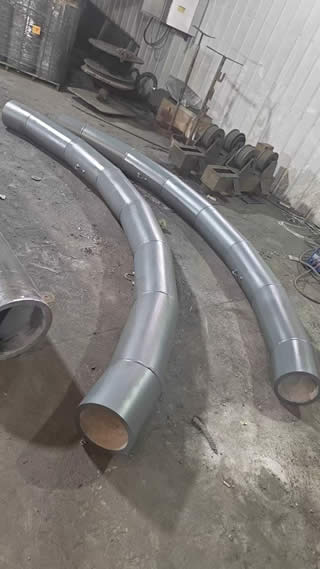
Japanese chemical and cement plants have compact pipe gallery layouts with extremely narrow installation space, requiring customized short-radius wear-resistant elbow and special-sized tees. All products must comply with JIS G 3459 industrial pipe standards, with complete batch test reports and seismic support matching documents. On-site acceptance is extremely strict, and non-standard customized sizes will lead to project delays.
Engineer Pitfall Reminder 1: Never select rubber-lined wear pipes for outdoor projects in the Middle East. High-temperature exposure will age and peel the lining in less than one year, causing frequent slurry leakage.
Daily Operation Maintenance & Fault Prevention for Pipeline Systems
Reasonable daily maintenance can double the service life of wear-resistant pipe systems. Most project teams only conduct maintenance after pipeline blockage or rupture, resulting in unnecessary production losses.
Regular Thickness Detection: Focus on wear-resistant elbows and tee joints, the most vulnerable parts of slurry pipelines. Conduct ultrasonic thickness testing every 3 months for high-frequency operation projects to monitor lining wear status.
Anti-Corrosion Maintenance: For Southeast Asian coastal projects, regularly repair damaged external coatings and clean rust on pipe supports to avoid localized corrosion penetration.
Regular Slurry Cleaning: During equipment shutdowns, clean sedimentary materials inside the pipeline to prevent hard scaling, which will increase flow resistance and accelerate local abrasion.
Standardized Storage: In the Middle East, avoid long-term direct sunlight exposure of spare pipes; in Southeast Asia, keep pipes elevated and covered to prevent tidal moisture erosion.
Engineer Pitfall Reminder 2: Do not perform random on-site welding on ceramic-lined pipe. Unstandardized welding will damage the bonding layer and cause lining delamination, completely ruining pipeline performance.
After sorting out thousands of global project cases, I found that over 70** of pipeline failures stem from typical selection misconceptions rather than product quality problems. This exclusive section sorts out the two most common wrong judgments and targeted correction schemes.
Misconception 1: Higher Hardness Equals Better Overall Performance
Most procurement personnel simply take hardness parameters as the sole selection standard, blindly choosing ultra-high hardness liners. In fact, ultra-high hardness ceramic liners have poor toughness and cannot resist strong particle impact. They are very easy to crack and fall off in quarry and mining coarse slurry scenarios. The correct logic is: sliding abrasion scenarios prioritize hardness, while impact abrasion scenarios prioritize lining toughness and composite structural stability.
Misconception 2: Uniform Specifications Are Suitable for the Whole Project
Many projects adopt unified pipeline specifications for the entire slurry pipeline to save procurement costs. However, elbows, tees, and pipe bends bear 3–5 times higher abrasion than straight pipes. Using the same lining thickness and material will cause rapid failure of pipe fittings, leading to frequent overall system shutdowns. The correct solution is to adopt graded configuration: enhance lining thickness and upgrade materials for vulnerable fittings while matching conventional specifications for straight pipes.
Conclusion
Selecting and maintaining a qualified wear-resistant pipe system requires comprehensive consideration of structural design, regional working conditions, slurry media characteristics, and standardized operation and maintenance. Blindly pursuing low prices or single performance parameters will bring huge hidden project costs. Whether for high-humidity and corrosive Southeast Asian chemical projects or high-temperature and sandy Middle East quarry projects, targeted customized configuration and scientific maintenance are the core of long-term stable pipeline operation. For reliable and cost-effective wear-resistant pipe for Southeast Asian chemical and quarry projects, professional customized solutions always outperform universal standard products.