Wear-Resistant Pipe Selection amp Procurement Guide for Asia Industrial Projects
Wear-Resistant Pipe Selection & Procurement Guide for Asia Industrial Projects
Practical Introduction to Wear-Resistant Pipe for Industrial Field Applications
After 12 years of onsite project service across Southeast Asia, the Middle East, and Japan-South Korea industrial sites, I’ve seen countless pipeline failures that could have been avoided with basic targeted selection. A qualified wear-resistant pipe is not just a standard industrial fitting, but a core component that stabilizes long-term operation for mining, cement, chemical, and dredging systems. Many project managers and procurement engineers only focus on initial purchase prices, ignoring regional climate and working condition differences, leading to pipe abrasion, leakage, and downtime losses that far exceed the pipe cost itself. This article shares real field experience, covering pipe classification, material performance, regional procurement pitfalls, and daily maintenance, to help B2B buyers and project leaders make cost-effective and reliable pipeline decisions for industrial slurry and abrasive material conveying systems.
In harsh industrial working conditions where solid particles, slurry, and high-speed flowing media exist, an abrasion-resistant pipe effectively reduces wall thinning and pipeline failure risks, serving as the basic guarantee for continuous production of core industrial systems.
Full Category Classification & Scenario Matching of Wear-Resistant Pipeline
There is no one-size-fits-all wear-resistant pipeline for industrial projects. Each type has its unique structural advantages and applicable scenarios, and mismatched models are the primary cause of premature pipe failure. Based on years of overseas project debugging experience, I classify mainstream products by structure, function, and connection method for targeted industrial scenario matching.
Structural & Functional Classification
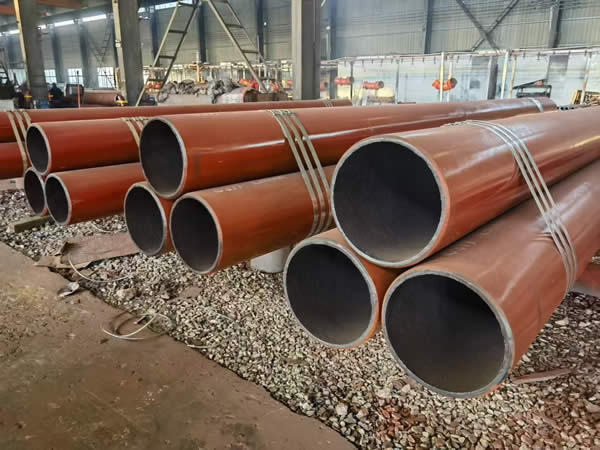
Straight pipes, elbows, tees, and reducers are the most commonly used accessories in slurry pipeline systems. Among them, elbows bear the strongest impact and abrasion from flowing media, so a wear-resistant elbow is always the first vulnerable part to be replaced in mining and dredging projects. In terms of wear-resistant structures, ceramic-lined pipe is the most widely used in fine particle slurry conveying, featuring thin wall, light weight, and excellent anti-abrasion performance. Bimetallic and hardfacing wear-resistant pipes are more suitable for heavy-impact working conditions with large ore particles, while high-chrome cast iron pipes excel in high-temperature and high-abrasion metallurgical and power plant environments. Rubber and polymer-lined pipes are preferred for corrosive acidic media with low impact force, avoiding metal corrosion and particle adhesion.
Connection Mode Adaptation for Overseas Projects
Different regional project standards determine the choice of connection methods. Welded connections are mostly used for fixed pipe corridors in Middle East thermal power plants, ensuring overall structural stability under long-term dry heat expansion and contraction. Flange connections are mainstream in Southeast Asian chemical and mining projects, convenient for quick disassembly and maintenance in rainy and humid environments. Clamp connections are widely adopted in Japanese and Korean precision projects, meeting the requirements of small installation space and seismic displacement, and fully complying with JIS and KS industrial pipeline installation standards.
Mainstream Wear-Resistant Pipe Material Performance Analysis & Regional Adaptation
Material selection is the core of pipeline durability. Each wear-resistant material has obvious advantages and shortcomings, and the key to long service life is to match materials with local climate and working conditions, rather than blindly choosing high-priced products.
Ceramic Lined & Bimetallic Composite Materials
Ceramic-lined pipe relies on high-density alumina ceramic lining, with ultra-high abrasion resistance, smooth inner wall, and no scaling. Its disadvantage is poor resistance to severe mechanical impact, so it is not suitable for large ore particle conveying. This material is perfectly adapted to Southeast Asian mining projects, where acidic mine water and fine slurry are common; the smooth inner wall effectively prevents slurry blockage caused by high humidity adhesion. Bimetallic composite pipes adopt outer carbon steel pipe + high-alloy wear-resistant inner layer structure, balancing pressure resistance and impact resistance, and can withstand the strong sand abrasion of Middle East open-pit mines and long-term sun exposure.
High-Chrome Cast Iron & Polymer Lining Materials
High-chrome cast iron pipes have excellent high-temperature resistance and impact resistance, suitable for coal ash conveying in Middle East power plants and high-temperature slag conveying in metallurgical projects. However, they are heavy and not suitable for projects with limited installation space. Polymer-lined wear-resistant pipes have outstanding acid and alkali corrosion resistance, ideal for Southeast Asian chemical projects with high humidity and salt spray erosion, and can effectively avoid outer pipe rust and medium corrosion failure.
Engineer’s Pitfall Reminder 1: Never use ceramic-lined pipes for coarse aggregate conveying in Middle East mining. Strong particle impact will cause ceramic peeling and pipeline leakage within 3 months, leading to unplanned project shutdowns.
Key Performance Parameters & On-Site Operating Efficiency
When evaluating the quality of wear-resistant pipeline products, B-end buyers should not only check nominal parameters but also focus on actual operating performance matching regional working conditions, including wear life, pressure resistance, temperature resistance, and flow loss indicators.
Service Life & Anti-Abrasion Performance
Under standard working conditions, ceramic-lined pipes have a service life 8-10 times that of ordinary seamless steel pipes, while bimetallic pipes have a 5-7 times longer life under heavy impact conditions. In Southeast Asia’s high-temperature and rainy environment, conventional steel pipes suffer from rapid wall thinning due to slurry mixed with rainwater and acidic substances, while qualified abrasion-resistant pipes can maintain stable performance for more than 5 years without frequent replacement.
Temperature Resistance & Flow Pressure Loss
Middle East projects face long-term high-temperature exposure above 50℃, which easily causes ordinary pipeline materials to age and deform. High-quality composite wear-resistant pipes can adapt to -20℃ to 350℃ operating temperature, avoiding pipeline cracking and seal failure caused by thermal expansion and contraction. In terms of flow efficiency, the smooth inner wall of ceramic-lined pipes reduces slurry friction resistance, effectively lowering pipeline pressure loss and improving the conveying efficiency of dredging and sand and gravel aggregate projects.
Impact Resistance & Anti-Blocking Performance
For port dredging and mine coarse material conveying projects, anti-impact and anti-blocking capabilities are crucial. Hardfacing and high-chrome cast iron pipes can resist continuous impact of large solid particles, while the non-stick inner wall of polymer-lined pipes avoids material blockage caused by high humidity adhesion in Southeast Asian rainy seasons.
Overseas Procurement Rules for Southeast Asia, Middle East, Japan & Korea Projects
I have undertaken more than 80 overseas pipeline projects, and found that most procurement failures stem from ignoring regional differentiated standards and working condition characteristics. The same set of pipeline solutions cannot be applied to all Asian regions, and targeted adjustment is essential.
Southeast Asia Project Procurement Focus
Southeast Asia features high temperature, high humidity, severe salt spray corrosion, and rainy season mud slurry. When purchasing wear-resistant pipe products, priority should be given to pipes with anti-rust outer wall treatment and corrosion-resistant lining. In addition, sea transportation is the main logistics method, so special marine packaging is required to avoid outer pipe rust and lining damp damage during long-distance transportation. For local mining projects with acidic mine water, polymer or ceramic lining is mandatory to prevent chemical corrosion and abrasion dual failure.
Middle East Project Procurement Focus
Middle East projects are dominated by dry heat, strong sunlight, and sand wind abrasion. Pipeline products need to have strong anti-aging and sand abrasion resistance. Flange sealing parts must be equipped with dust-proof and high-temperature resistant accessories to avoid sand intrusion and seal failure caused by long-term exposure. At the same time, local power and metallurgical projects have strict fire protection standards, so wear-resistant pipes and connecting accessories must meet flame-retardant and high-temperature resistant specifications.
Japan & Korea Project Procurement Focus
Japanese and Korean industrial projects are characterized by refined management, narrow installation space, and strict seismic requirements. Procured wear-resistant pipeline products must strictly comply with JIS G 3459 and KS D 3562 standards. The pipe body size tolerance needs high precision to adapt to compact pipe gallery layout, and supporting seismic brackets must be matched to cope with regional seismic working conditions. The local acceptance mechanism is extremely strict, and unqualified dimensional accuracy and surface treatment will lead to direct return of goods.
Engineer’s Pitfall Reminder 2: Do not purchase standard ordinary wear-resistant pipes for Japanese and Korean precision projects. Failure to meet JIS/KS precision standards will result in project acceptance failure and huge rework costs.
Daily On-Site Operation & Maintenance Specifications
High-quality wear-resistant pipeline products also rely on standardized daily maintenance to extend service life. Many projects have good initial installation quality, but frequent failures occur due to irregular inspection and maintenance habits.
Regular Inspection & Thickness Detection
For Southeast Asian and Middle East outdoor pipelines, monthly visual inspection is required to check for outer wall rust, flange looseness, and lining peeling. Ultrasonic thickness measurement should be carried out every quarter for elbows and tees with the most severe abrasion, and replacement should be arranged in advance when the wear thickness reaches the warning value to avoid sudden pipeline rupture.
Partial Repair & Blockage Prevention Maintenance
Local small-area damage of bimetallic and hardfacing pipes can be repaired by targeted surfacing welding, avoiding overall pipe replacement and saving project cost. For pipelines prone to slurry blockage in rainy seasons, regular online cleaning is required to prevent material accumulation and secondary abrasion. In addition, idle pipelines in high-humidity areas need anti-rust sealing treatment to avoid internal moisture corrosion.
Storage & Replacement Standardization
Pipeline accessories stored in Middle East open-air sites need sunshade and dust-proof measures to prevent material aging. Vulnerable parts such as wear-resistant elbows should be reserved with spare parts in advance to ensure rapid replacement and reduce production downtime.
Exclusive Guide: Industrial Pipeline Procurement Cost-Performance Optimization
Most B-end buyers confuse initial purchase cost with total project cost. In overseas industrial pipeline projects, low-price procurement often brings higher hidden costs. Based on years of overseas project cost control experience, I summarize targeted cost-performance optimization strategies for different regional projects.
Distinguish Core Vulnerable Parts & Ordinary Pipe Sections
Blindly using high-grade full wear-resistant pipelines will cause cost waste, while full low-grade products will bring frequent failure losses. The optimal solution is hierarchical matching: key vulnerable parts such as elbows, tees, and slurry inlet sections adopt high-performance ceramic-lined or bimetallic wear-resistant structures; for straight pipe sections with low abrasion intensity, conventional optimized wear-resistant pipes can be used. This hierarchical matching mode can reduce overall procurement cost by 15**-25** while ensuring project stability, which is most suitable for large-scale mining and cement projects in Southeast Asia and the Middle East.
Avoid Hidden Cost of Non-Standard Customization & Acceptance
Many procurement teams pursue excessive non-standard customization without combining regional standards, resulting in prolonged delivery cycles and unqualified acceptance. Japanese and Korean projects must follow JIS/KS standard sizes to avoid customization deviation; Middle East and Southeast Asian conventional projects prioritize standard specifications, and only carry out non-standard customization for special pipe gallery spaces and working conditions. In addition, formal suppliers with ISO 9001 certification can provide complete acceptance documents, avoiding hidden costs such as acceptance delays and rework caused by incomplete qualification materials.
Conclusion
Selecting a suitable wear-resistant pipe is a systematic work integrating working condition matching, material selection, regional standard adaptation, and daily maintenance. Different from ordinary steel pipes, professional abrasion-resistant pipe and wear-resistant pipeline products need to be matched according to regional climate, medium characteristics, and project standards. Ceramic-lined pipes excel in fine slurry anti-abrasion and anti-blocking, bimetallic and high-chrome products adapt to heavy impact and high-temperature working conditions, and polymer-lined pipes cope with humid and corrosive environments. For overseas buyers, focusing on total life cycle cost rather than initial price is the core of improving project benefit. As a professional wear-resistant pipe supplier in Southeast Asia, we provide targeted pipeline selection, customization, and after-sales maintenance solutions for mining, cement, chemical, and dredging projects across Asia, helping industrial projects reduce failure rates and long-term operating costs.