Core Value of Wear-Resistant Pipe for Global Aggregate and Industrial Projects
Core Value of Wear-Resistant Pipe for Global Aggregate and Industrial Projects
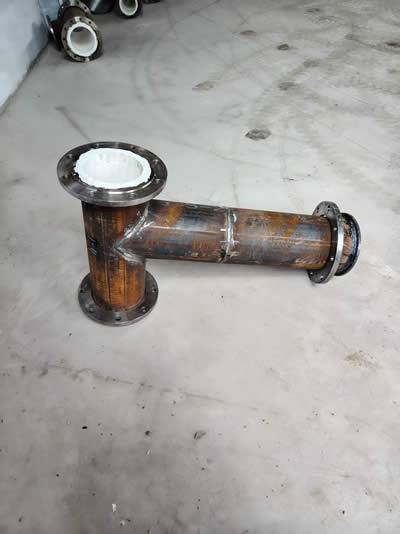
With over a decade executing pipeline engineering and B2B procurement consulting for aggregate sand, metallurgy, and chemical projects across Southeast Asia, the Middle East, and Japan, I’ve witnessed countless unplanned shutdowns caused by subpar conveying pipeline solutions. A reliable wear-resistant pipe is the backbone of bulk material transportation, designed to handle constant particle friction, high-speed slurry impact, and harsh regional climatic stress that standard steel pipelines cannot withstand. Unlike generic piping, industrial wear-resistant pipeline is engineered specifically for abrasive media including crushed stone, mineral slurry, and metallurgical slag, delivering stable long-term operation for heavy-duty industrial conveying systems.
Each overseas region poses unique operational challenges that redefine core pipe performance requirements. Aggregate plants in Southeast Asia battle rainy-season thick mud and salt-induced bracket corrosion; Middle East quarry sites face relentless solar radiation and wind-blown sand abrasion; Japanese metallurgical factories demand space-saving installation and seismic-compliant piping per local industrial standards. This article shares field-tested insights on pipe performance, custom specification design, regional procurement rules, and old system retrofits for global B2B project managers and procurement specialists.
Key Performance & Operational Efficiency of Industrial Wear-Resistant Pipeline
Field performance is always more critical than textbook parameters. Many procurement teams only check basic pressure ratings but ignore practical efficiency indicators that determine pipeline lifespan and operational costs. Based on my on-site test data from global aggregate and metallurgy projects, I break down the core practical performance metrics of abrasion-resistant pipe.
Wear Lifespan & Impact Resistance
The primary advantage of professional wear-resistant piping is its extended service life against solid particle abrasion. Traditional seamless steel pipes last only 6–9 months in high-volume aggregate conveying scenarios, while qualified ceramic-lined pipe and bimetallic wear-resistant pipe can operate continuously for 5–8 years. Impact resistance is another key indicator: bimetallic composite pipes excel at handling large broken stone impact in quarry projects, while ceramic-lined options are ideal for fine sand and uniform slurry conveying with low impact force.
Temperature & Pressure Bearing Capacity
Different regional climates and process conditions require matched temperature and pressure resistance. Most standard wear-resistant pipeline complies with ASTM A106 pressure standards, supporting conventional industrial medium pressure up to 16MPa. For Middle East open-air aggregate projects with extreme ambient temperatures exceeding 55°C, high-temperature customized models avoid thermal softening and structural deformation. For Southeast Asian chemical projects with high-temperature acidic slurry, composite lined pipes maintain stable performance without lining peeling or corrosion failure.
Flow Efficiency & Anti-Clog Performance
Smooth inner wall of professional wear-resistant elbow and straight pipe minimizes fluid resistance and pressure loss, ensuring stable material conveying flow. This anti-fouling and anti-blocking feature is crucial for rainy seasons in Southeast Asia, where high-viscosity mud slurry easily adheres to rough pipe walls and causes pipeline blockage. Optimized inner wall structure effectively reduces medium deposition, cutting down manual cleaning frequency and improving overall project operational efficiency.
Custom Size & Engineering Non-Standard Customization Rules
Standard pipe sizes often cannot meet the personalized layout needs of overseas industrial projects. Most quarry, metallurgical, and chemical projects require non-standard customized wear-resistant pipe to adapt to on-site pipe gallery spacing and process parameters. I’ve summarized the most commonly used customized specifications and field adaptation rules for global B-end procurement.
Standard DN/OD Specification Matching
Conventional industrial pipelines adopt DN nominal diameter standards, while overseas mining and aggregate projects mostly use OD outer diameter standards matching international flange fittings. All customized pipes can be precisely adjusted according to API 5L and ISO 9001 certification standards to ensure compatibility with local project pipe fittings, valves, and equipment interfaces.
Non-Standard Structural Customization
On-site project conditions require flexible customization of pipe wall thickness, single pipe length, and elbow angles. For narrow-space Japanese metallurgical projects that follow JIS G 3459 standards, ultra-short radius wear-resistant elbow and compact tee customization solves installation space limitations. For large-scale Middle East quarry long-distance conveying lines, extended single-pipe length reduces flange connection points, lowering sand dust infiltration and leakage risks.
Regional Targeted Customization
For Southeast Asian coastal projects, we customize salt-fog resistant outer wall coatings and acid-resistant lining structures to cope with high humidity and acidic mine water. For Middle East desert projects, reinforced dust-proof flange structures and anti-ultraviolet outer layers are added to adapt to long-term sun exposure and sand erosion.
Overseas B2B Procurement Pitfalls & Regional Selection Guidelines
Procurement failures for cross-border wear-resistant pipeline mostly stem from generic selection rather than product quality issues. Different regional climate environments and local industry standards put forward completely different procurement requirements, and one-size-fits-all selection will definitely lead to early pipeline failure.
Southeast Asia: High Humidity, Salt Fog & Mud Slurry Adaptation
Southeast Asian tropical monsoon climates bring year-round high temperature and humidity, plus coastal salt fog erosion. Ordinary uncoated steel outer pipes will rust rapidly during sea transportation and on-site storage. The acidic mine water in local quarry projects will slowly corrode pipeline bonding layers, causing lining peeling. Engineer’s Avoidance Tip: Never ignore seaworthy packaging and anti-rust treatment for cross-border shipments; all pipes must adopt fully sealed waterproof and dust-proof packaging to avoid pre-installation corrosion.
Middle East: Dry Heat, Sand Erosion & Thermal Expansion Control
Middle East desert projects feature extreme temperature differences and floating sand storms. Exposed slurry pipeline faces dual damage: internal stone abrasion and external sand wind scouring. Severe thermal expansion in high temperatures often causes flange gasket deformation and pipeline leakage.Engineer’s Avoidance Tip: Reserve sufficient thermal expansion gaps during pipeline design and procurement, and exclusively select high-temperature resistant rubber gaskets for flange connections to prevent dust and sand penetration.
Japan & South Korea: Standard Compliance & Seismic Adaptation
Japanese and Korean industrial projects implement strict JIS and KS D 3562 industry standards, with mandatory seismic support and precise installation requirements. On-site equipment layout is compact, requiring high-precision customized pipe sizes. Procurement must provide complete material test reports and factory certification documents to pass strict local project acceptance.
Daily Maintenance & Fault Prevention for Long-Term Pipeline Operation
Scientific daily maintenance can maximize the service life of customized wear-resistant pipeline and reduce project operation and maintenance costs. For overseas projects with inconvenient after-sales support, standardized daily inspection and fault prevention are particularly important.
Regular Inspection & Thickness Monitoring
Focus on regular wall thickness detection of vulnerable parts such as wear-resistant elbow and tee every six months. For aggregate conveying pipelines with large particle impact, local thinning of pipe walls is prone to occur. Timely early warning and replacement can avoid sudden pipeline rupture and material leakage accidents. Meanwhile, check the outer wall anti-rust coating regularly, especially for outdoor pipe galleries in Southeast Asia.
Regular Cleaning & Anti-Failure Maintenance
For pipelines transporting viscous mud and fine sand, regular high-pressure water cleaning is required to prevent long-term scaling and pipeline blockage. For idle pipelines in Middle East desert areas, seal the pipe orifices to avoid sand accumulation inside the pipe, which will aggravate abrasion during restart operation. Regular inspection of welds and flange connections can effectively prevent air leakage and material leakage faults.
Exclusive Guide: Old Wear-Resistant Pipeline System Retrofit Solutions
Most overseas old industrial plants and quarry projects face pipeline aging, low conveying efficiency, and frequent failure problems. Blind overall pipeline replacement causes high cost and long construction downtime, while partial targeted renovation is the most cost-effective solution. Based on overseas on-site reconstruction experience, I summarize two core retrofit schemes.
Partial Key Component Replacement Retrofit
Statistics show that more than 80** of old pipeline faults occur in elbows, tees and variable-diameter parts, while straight pipes still maintain good performance. For old systems with limited budget and short construction window, only replace severely worn wear-resistant elbow and tee with new ceramic-lined pipe components. This scheme can quickly restore pipeline operation efficiency, reduce project downtime loss, and save more than 60** of renovation cost compared with full pipeline replacement. It is very suitable for small and medium-sized aggregate projects in Southeast Asia.
Overall Lining Upgrade & Structural Optimization
For old pipelines that have been in operation for more than 5 years in Middle East large-scale quarries and Japanese metallurgical plants, the inner lining is comprehensively aged and the structural design cannot adapt to current working conditions. It is necessary to carry out overall lining upgrade and pipeline support optimization: replace the original ordinary lining with high wear-resistant composite materials, and match seismic and dust-proof optimized connection structures. This retrofit scheme thoroughly solves the problems of low efficiency and frequent failures of old pipelines, and meets the latest local industrial standard requirements.
Conclusion & Practical Project Recommendations
The stable operation of industrial conveying systems depends on reasonable selection, customized specification design, standardized maintenance, and scientific old pipeline retrofit of wear-resistant pipe. Global projects need to formulate targeted solutions according to regional climate characteristics, industry standards and working conditions: anti-corrosion and anti-rust for Southeast Asian humid environments, high-temperature and sand-proof for Middle East deserts, and high-precision standard compliance for Northeast Asian projects.
As an experienced wear-resistant pipe supplier for global quarry and metallurgy projects, we provide one-stop customized pipeline solutions and old system retrofit services for overseas B-end clients, helping enterprises reduce operation costs and avoid engineering risks in long-term project operation.