Field Engineer s Guide Wear Resistant Pipe Selection Regional Adaptation and Common Sourcing Mistakes
Field Engineer’s Guide: Wear-Resistant Pipe Selection, Regional Adaptation and Common Sourcing Mistakes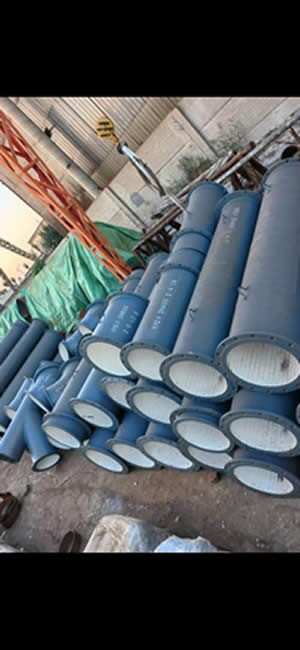
After 12 years executing pipeline projects for mining, power plants, dredging and chemical facilities across Southeast Asia, the Middle East, and Japan & South Korea, I’ve seen countless project delays and cost overruns caused by improper wear-resistant pipe selection and careless on-site adaptation. Most B-side buyers and project managers focus only on pipe price and basic abrasion resistance, ignoring regional climate traits, medium characteristics, and hidden selection pitfalls. A qualified abrasion-resistant pipe solution is never one-size-fits-all; it needs to match local working conditions, installation standards, and long-term operation and maintenance demands. This article shares practical field experience to help overseas engineering teams avoid mainstream mistakes and select cost-effective wear-resistant pipeline systems for industrial slurry and particle conveying scenarios.
1. Core Application Value of Wear-Resistant Pipe in Global Industrial Projects
Wear-resistant pipe is specially designed for harsh industrial scenarios with high particle abrasion, slurry impact, and corrosive medium erosion, solving the core pain point of short service life of ordinary steel pipes in heavy-duty conveying systems. Its core value varies significantly across different industrial sectors and overseas regions, which is the primary basis for our project selection.
In globalslurry pipeline systems including mineral slurry conveying, coal washing, river dredging, and cement raw material transportation, traditional seamless steel pipes suffer from rapid wall thinning, frequent leakage, and 6-12 month replacement cycles. By contrast, qualified ceramic-lined pipe and composite wear-resistant structures can extend service life by 8-15 times. For port and sand aggregate projects, it resists high-speed impact of gravel and ore particles; for thermal power and metallurgical projects, it adapts to high-temperature ash and slag conveying; for chemical plants, it withstands weak acid and alkali medium erosion.
Regionally, this value difference is more prominent. Southeast Asian mining and dredging projects face year-round high temperature, high humidity, and acidic mine water, where ordinary pipes fail due to simultaneous abrasion and electrochemical corrosion. Middle Eastern desert projects deal with continuous sand wind abrasion and extreme temperature differences, leading to accelerated aging of ordinary pipeline structures. Japanese and Korean industrial projects pursue long-cycle stable operation, making wear-resistant elbow and pipe systems a standard configuration for standardized factory pipeline upgrades.
2. Mainstream Wear-Resistant Pipe Material Analysis: Advantages, Defects and Regional Adaptation
Material selection determines 90** of pipeline operating performance. I’ve sorted out three mainstream wear-resistant pipe materials widely used in overseas projects, with clear applicable working conditions and regional adaptation rules, avoiding blind material selection for B-end procurement teams.
2.1 Alumina Ceramic Lined Composite Pipe
This is the most widely used ceramic-lined pipe in global industrial projects, with an outer carbon steel pipe layer and inner high-purity alumina ceramic lining. Its biggest advantage is ultra-high hardness and abrasion resistance, suitable for most slurry and particle conveying scenarios. It has good temperature resistance up to 350℃ and stable performance in conventional corrosive media. However, its obvious defect is poor anti-collision and anti-flexion performance, making it fragile under strong external impact and uneven foundation settlement.
Regional adaptation tips: Ideal for Southeast Asian coal washing and chemical projects with acidic slurry and high humidity. The dense ceramic lining effectively isolates acid mine water corrosion and mud abrasion. Not recommended for Middle Eastern open-air pipeline projects with frequent sand wind impact and violent thermal expansion and contraction.
2.2 Bimetallic Composite Wear-Resistant Pipe
Composed of outer ordinary steel pipe and inner high-chromium alloy wear-resistant layer, this material features strong impact resistance and good welding performance, convenient for on-site cutting and secondary processing. It performs well in high-impact scenarios such as coarse ore conveying and large-particle aggregate transportation. The downside is higher cost and weaker corrosion resistance than ceramic-lined pipes, with poor tolerance for acidic and salt spray environments.
Regional adaptation tips: Preferred for Middle East open-pit mining and cement plant projects. It resists continuous sand wind scouring and thermal deformation under high-temperature exposure, and its flexible welding structure adapts to desert pipeline foundation changes.
2.3 Rubber Lined Wear-Resistant Pipe
The inner rubber lining has excellent anti-corrosion and anti-cavitation performance, suitable for fine slurry and weak corrosive medium conveying. But its temperature resistance is poor (max 80℃), and it is easy to age and fail in high-temperature and strong light environments.
Regional adaptation tips: Suitable for closed indoor pipeline systems in Japan and South Korea, which have constant temperature and no strong light exposure. It meets the precise anti-corrosion requirements of refined chemical projects and complies with KS D 3562 pipeline auxiliary standards.
3. Complete Product Types and Scenario Matching Rules
In actual overseas project procurement, many buyers only purchase straight pipes and ignore the matching of pipe fittings, resulting in uneven system wear and frequent failure of local components. A complete wear-resistant pipeline system includes straight pipes, wear-resistant elbows, tees, reducers, and special pipe fittings, with different structural forms and connection methods adapting to distinct scenarios.
Straight wear-resistant pipes are mainly used for linear long-distance conveying of slurry and particles, adopting welding or flange connection. For long-distance dredging and mine slurry conveying in Southeast Asia, integral welded connections are recommended to avoid salt spray corrosion at flange gaps. Wear-resistant elbow is the most vulnerable component in the pipeline system, bearing the maximum particle impact and scouring force. For Middle East mining and cement projects with high-speed material conveying, thickened ceramic-lined elbows must be configured, otherwise elbow perforation and material leakage will occur within 3-6 months.
Tees and reducers are mostly used for pipeline shunting and pressure adjustment. In Japanese and Korean projects with limited installation space and high precision requirements, small-radius customized tees and compact flange connection structures are often required to adapt to dense pipe gallery layout. All customized pipe fittings need to comply with local industry standards: Japanese projects follow JIS G 3459 standard, while Korean projects refer to KS pipeline specification requirements, which is a key point for overseas project acceptance.
4. Overseas Procurement Key Points for Southeast Asia, Middle East, Japan and Korea
After years of project docking, I find that regional procurement differences are far greater than product differences. Generic procurement schemes will definitely lead to unqualified on-site use or failed acceptance. Here are my core practical tips for three major regional markets.
Southeast Asia Market Focus: The core working condition challenges are high temperature and high humidity, perennial rainwater erosion, acid mine water, and coastal salt spray. When purchasing wear-resistant pipe, priority should be given to products with anti-rust outer wall treatment and closed packaging. Sea transportation is long, and ordinary outer steel pipes are prone to rust during shipping, leading to on-site installation rejection. In addition, pipe gallery supports are easy to corrode in humid environments, so the pipeline outer wall needs additional anti-corrosion coating matching.
Middle East Market Focus: Dry heat, strong sunlight exposure, and frequent sand wind abrasion are the biggest challenges. Pipeline systems have large thermal expansion and contraction coefficients under extreme temperature differences between day and night. Procurement must confirm the pipeline’s thermal deformation resistance and flange sealing dustproof performance. Open-air pipelines need to have sun aging resistance, and all connecting bolts must be equipped with dust-proof gaskets to prevent sand from invading the connection gap and causing pipeline vibration and wear.
Japan & Korea Market Focus: These two markets have extremely strict project acceptance and refined operation and maintenance systems. Pipeline products must comply with JIS and KS industry standards, with complete material test reports and factory certification documents. On-site installation space is narrow, so non-standard fixed-size pipelines are often required. Meanwhile, the region has mandatory seismic design requirements, and pipelines must be matched with professional seismic supports to pass project acceptance.
Engineer’s Pitfall Reminder: Never use domestic conventional pipeline standards to judge Japanese and Korean projects. Their tolerance for pipeline wall thickness error, lining uniformity, and welding seam flatness is 3 times stricter than international general standards, and non-compliant products will be directly returned.
5. Daily Operation and Maintenance Specifications for Long-Term Stable Operation
Good maintenance can double the service life of abrasion-resistant pipe systems, especially for overseas projects with high replacement costs and inconvenient after-sales service. I’ve summarized a set of field-tested maintenance specifications suitable for different regional scenarios.
For Southeast Asian projects with high humidity and rainy seasons, regular pipeline outer wall rust removal and anti-corrosion treatment is required every quarter. After heavy rain, check the drainage of the pipe gallery to avoid long-term water soaking and electrochemical corrosion of the pipeline base. For slurry conveying pipelines, regular cleaning of residual mud deposits is needed to prevent local blockage and aggravated partial wear.
For Middle Eastern desert projects, regular inspection of flange dust-proof gaskets and pipeline surface aging is essential. Sand wind will cause fine particle abrasion on the pipeline outer wall, so regular thickness detection of key wear parts (especially elbows and tees) is required. In high-temperature seasons, stop the pipeline regularly to check thermal expansion gaps to avoid pipeline cracking caused by excessive extrusion.
For Japanese and Korean refined operation projects, implement monthly fixed-point thickness measurement and data recording of wear-resistant key parts. Replace severely worn elbows and local linings in advance according to detection data, avoiding sudden shutdown failures. Store spare pipelines in a dry and constant-temperature warehouse to prevent ceramic lining peeling caused by temperature and humidity changes.
Engineer’s Pitfall Reminder: Many teams only replace damaged pipelines and ignore the aging of supporting brackets and gaskets. Aging brackets will cause pipeline displacement, increasing local wear by more than 50**, which is a hidden cost easily ignored in daily maintenance.
6. Exclusive Section: High-Frequency Wear-Resistant Pipe Selection Mistakes in Overseas Projects
Based on my on-site project experience, 80** of pipeline operation failures stem from selection mistakes rather than product quality problems. I’ve sorted out two most common high-frequency mistakes that overseas B-end buyers are prone to make, with targeted correction schemes.
6.1 Mistake 1: Blindly Pursuing High Hardness While Ignoring Regional Climate Adaptability
Most procurement teams equate high hardness with high wear resistance and blindly select ultra-high hardness ceramic-lined pipes for all scenarios. In fact, ultra-hard ceramic linings are brittle and have poor temperature deformation resistance. In Middle Eastern desert environments with extreme temperature differences between day and night, ceramic lining peeling and falling off often occur within half a year of use. In coastal Southeast Asian salt spray environments, single high-hardness wear resistance cannot resist electrochemical corrosion, leading to rapid pipeline wall thinning.
Correction Scheme: Take working condition and climate adaptability as the primary selection standard, and wear resistance as the secondary standard. Dry and hot desert scenarios prioritize bimetallic composite pipes with strong deformation resistance; humid and corrosive coastal scenarios prioritize anti-corrosion enhanced ceramic composite pipes.
6.2 Mistake 2: Uniform Pipeline Specification Matching, Ignoring Local Wear Difference
Many projects adopt unified pipe diameter and wall thickness specifications for the entire pipeline system to simplify procurement and construction. However, elbows, tees, and material turning parts bear 3-5 times higher impact and abrasion than straight pipes. Unified specifications will lead to premature failure of pipe fittings, while straight pipes are still in normal service, increasing frequent replacement costs and project downtime losses.
Correction Scheme: Implement graded matching specifications. Key wear parts such as wear-resistant elbows and tees adopt thickened and enhanced models, while straight pipes adopt conventional standard specifications. This scheme balances project cost and service life, which is the most cost-effective matching mode for long-term operation of overseas industrial pipelines.
7. Conclusion
The selection and application of wear-resistant pipe for overseas industrial projects is a systematic engineering work that integrates material performance, regional working conditions, standard adaptation, and operation and maintenance management. There is no universal best product, only the most matching solution. For Southeast Asian mining and dredging projects, focus on anti-corrosion and moisture-proof performance; for Middle Eastern desert projects, focus on temperature deformation resistance and dust-proof wear resistance; for Japanese and Korean high-standard projects, focus on standard compliance and refined matching. Avoiding high-frequency selection mistakes and adopting graded configuration and standardized maintenance can effectively reduce project operation costs and extend pipeline service life. For global industrial engineering teams looking for stable and cost-effective wear-resistant pipe supplier in Southeast Asia and cross-regional pipeline solution support, scenario-based customized abrasion-resistant pipe systems are always the core of long-term project success.