Wear-Resistant Pipe Field Selection Material Guide and Regional Application Pitfalls for Mining amp Industrial Projects
Wear-Resistant Pipe: Field Selection, Material Guide and Regional Application Pitfalls for Mining & Industrial Projects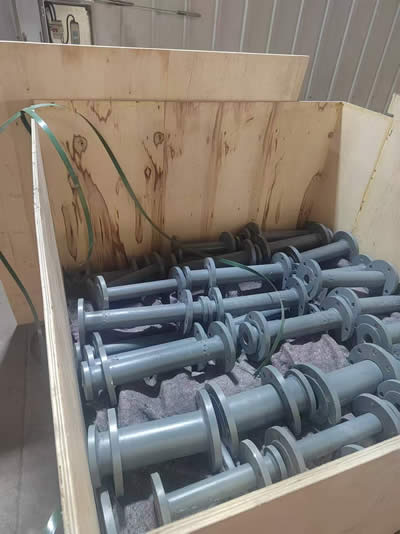
After 12 years of onsite project execution and B2B procurement consulting for mining, power plant, cement, and port projects across Southeast Asia, the Middle East, and Japan & South Korea, I’ve seen countless costly failures caused by improper wear-resistant pipe selection and blind standardized installation. Most project managers and procurement teams fall into the trap of choosing low-cost generic pipes without matching local climate, slurry medium, and operational load, leading to frequent pipe leakage, abrasion failure, and unplanned downtime. This article shares real field experience, targeted regional adaptation rules, and practical selection tips for abrasion-resistant pipe systems, tailored for overseas industrial EPC projects and bulk material conveying scenarios.
1. Core Functions & Industrial Application Scenarios of Wear-Resistant Pipeline
A professional wear-resistant pipeline is not just a thickened steel pipe—it is a system designed to resist high-speed particle abrasion, slurry impact, and long-term industrial medium corrosion. Its core value lies in extending pipeline service life and stabilizing continuous production for high-wear industrial conveying systems. Unlike ordinary carbon steel pipes that wear out rapidly under harsh working conditions, qualified wear-resistant pipeline solves two core pain points: solid particle scouring and medium chemical erosion.
In overseas projects, this type of slurry pipeline is widely deployed in high-intensity working scenarios. For mining projects, it undertakes the conveying of ore slurry, tailings, and coarse gravel materials. For thermal power plants, it handles coal ash and desulfurization slurry transportation. Cement and metallurgy projects use it for clinker powder and mineral residue conveying, while port and sand aggregate projects rely on it for bulk material loading and unloading pipelines. These scenarios all feature high flow rate, high particle hardness, and long continuous operation time, which are the core application boundaries of professional wear-resistant piping systems.
2. Mainstream Material Analysis: Performance, Advantages and Regional Adaptability
Material selection is the core of abrasion-resistant pipe engineering. No single material fits all regions and working conditions. Based on years of overseas project verification, I sort out the most practical mainstream materials and their targeted applicable scenarios and regional climates.
2.1 Ceramic-lined Pipe (Alumina Ceramic Lining)
Ceramic-lined pipe is the most widely used product in medium and high-wear working conditions. Its structure takes high-strength carbon steel as the outer pipe and 95** alumina ceramic as the inner wear-resistant layer. The ceramic layer is bonded with a special high-temperature adhesive and integrated with the steel pipe as a whole. Its biggest advantage is ultra-high wear resistance—its service life is 8–10 times that of ordinary steel pipes, and it has excellent anti-scaling performance for fine slurry.
Field Engineer Pitfall Reminder 1: Many buyers only focus on ceramic thickness and ignore the bonding layer quality. In Southeast Asia’s high-temperature and high-humidity environment, inferior adhesive layers will hydrolyze and peel off within 6–12 months, causing sudden pipe blockage and pipeline failure.
This material is suitable for Southeast Asian mining slurry, power plant desulfurization pipelines, and Japanese and Korean fine material conveying projects. It is not recommended for Middle East extreme open-air exposure scenarios with long-term strong ultraviolet radiation and severe dry heat aging.
2.2 Alloy Wear-Resistant Steel Pipe
Alloy steel pipes integrate wear resistance and impact resistance, with no lining shedding risk. The outer wall and inner wall are integrated alloy materials, featuring strong anti-impact ability, good high-temperature resistance, and excellent welding performance. It performs well in scenarios with large particle impact and frequent material impact, such as coarse ore conveying and large-diameter port bulk material pipelines.
Its main shortcoming is weaker fine-slurry wear resistance than ceramic-lined pipe, and it is prone to surface oxidation and rust in salt spray environments. It is the preferred material for Middle East open-air mining pipelines, as its structural stability can resist dry heat expansion and sand wind abrasion.
2.3 Rubber-Lined Wear-Resistant Pipe
Rubber-lined pipes excel in anti-corrosion and anti-cavitation performance, suitable for acidic slurry and corrosive medium conveying. They are commonly used in chemical and mineral processing projects with acidic water media. However, they have poor high-temperature resistance and cannot adapt to Middle East long-term solar exposure and high-temperature working conditions.
3. Key Performance Parameters & On-Site Operational Efficiency
When evaluating the quality of wear-resistant pipe, procurement teams cannot only refer to parameter sheets. Field operational performance, including wear life, pressure resistance, temperature resistance, and flow loss, directly determines project operating costs.
- Wear Service Life: Ceramic-lined pipe stably achieves 5–8 years of service life in conventional mining slurry scenarios. Alloy steel pipes last 2–3 years under high-impact conditions. In Southeast Asia’s rainy season mud and acidic mine water environment, the service life of unoptimized ordinary wear-resistant elbow will be shortened by more than 40**.
- Pressure & Temperature Resistance: Standard industrial wear-resistant pipes support 1.0–10MPa pressure, meeting most mining and chemical project needs. Ceramic-lined pipes can withstand continuous working temperatures below 200°C, suitable for power plant desulfurization and cement plant waste gas conveying.
- Flow Loss & Anti-Blocking Performance: The smooth inner wall of ceramic-lined pipe effectively reduces slurry flow resistance, lowers pipeline pressure loss, and avoids material scaling and blockage. This is particularly critical for Southeast Asian rainy season high-viscosity mud conveying projects, which can greatly reduce daily cleaning and maintenance frequency.
- Impact Resistance: Alloy steel wear-resistant elbow and straight pipe are superior in resisting large particle impact, solving the problem of local rapid wear of pipeline bends in coarse ore conveying systems.
4. Regional Procurement & Installation Adaptation Rules (SEA / Middle East / JP&KR)
The biggest difference between domestic and overseas wear-resistant pipeline projects is regional environmental adaptability. Standard pipe configurations will definitely cause problems in cross-border projects. Below are targeted procurement and construction rules summarized from years of field experience.
4.1 Southeast Asia: High Humidity, Salt Spray & Acidic Working Condition Adaptation
Southeast Asian mining and port projects face three core challenges: year-round high temperature and high humidity, coastal salt spray erosion, and acidic mine water corrosion. In procurement, the outer pipe of wear-resistant pipe must adopt anti-rust paint with salt spray resistance grade above C5. During sea transportation, full sealed waterproof packaging is mandatory—otherwise, the pipe flange and outer wall will rust in marine humid air, affecting on-site docking and installation. In addition, local rainy season mud has high viscosity, so pipelines need to prioritize smooth inner wall materials to prevent adhesion and blockage.
4.2 Middle East: Dry Heat, Sand Abrasion & Thermal Expansion Control
Middle East projects are dominated by open-air layout, with long-term strong sunlight exposure, severe sand wind abrasion, and large temperature difference between day and night. When selecting wear-resistant pipe, priority must be given to materials with strong thermal stability. Pipeline flanges and sealing gaskets need dust-proof and high-temperature resistant configurations to avoid sand infiltration causing sealing failure. Meanwhile, reserved expansion joints must be increased in pipeline design to cope with thermal expansion and contraction caused by extreme temperature differences, preventing pipeline cracking and interface leakage.
4.3 Japan & South Korea: Standard Compliance, Compact Layout & Seismic Requirements
JP and KR projects feature strict industrial standards, compact plant space, and mandatory seismic design. All wear-resistant pipeline products must comply with JIS G 3459 and KS D 3562 standard specifications. On-site installation space is narrow, requiring customized short-size pipes and precision flange positioning. In addition, pipeline support brackets must adopt seismic structures to meet local industrial safety acceptance standards, and the whole set of parameters needs full record filing for strict project final inspection.
5. Daily Operation Maintenance & Fault Prevention Strategies
Good maintenance can double the service life of wear-resistant pipeline systems. Most project losses are caused by irregular daily inspection and untimely minor fault handling. Combined with overseas on-site operation habits, I summarize targeted maintenance specifications for different regions.
5.1 Regular Inspection & Routine Maintenance
For Southeast Asian projects, monthly outer wall rust inspection and flange sealing check are required, focusing on salt spray corrosion of pipe supports. For Middle East open-air pipelines, regular cleaning of surface sand and dust is needed to avoid long-term sand accumulation causing local overheating and material aging. For Japanese and Korean refined operation projects, regular pipe wall thickness testing and operation parameter recording are mandatory to meet standardized operation assessment requirements.
5.2 Common Fault Handling & Replacement Standards
Wear-resistant elbow is the most vulnerable part of the whole pipeline system, prone to thinning and perforation due to long-term material scouring. Once the wall thickness wears to 1/3 of the original thickness, it must be replaced immediately, and delayed replacement will lead to sudden shutdown losses. For minor scaling and blockage, high-pressure water cleaning is recommended instead of brute force knocking, to avoid damage to the inner wear-resistant layer. For local rust on the outer pipe, timely anti-rust paint repair is required to prevent spread of corrosion.
Field Engineer Pitfall Reminder 2: Many teams only replace damaged elbows and ignore the matching flange sealing gaskets. In high-temperature and high-humidity overseas environments, old gaskets will fail rapidly, causing secondary leakage problems within a short time after maintenance.
6. Exclusive Guide: High-Frequency Wear-Resistant Pipe Selection Mistakes in Overseas Projects
After sorting out hundreds of overseas project cases, I found that more than 70** of pipeline operation failures stem from selection mistakes rather than product quality problems. The following two high-frequency misunderstandings are the most likely to be ignored by B-end procurement and project teams.
6.1 Mistake 1: Blindly Pursuing Low Unit Price, Ignoring Regional Working Condition Matching
Many procurement teams take unit price as the primary selection index and choose ordinary thickened steel pipes instead of professional abrasion-resistant pipe. In the short term, the procurement cost is reduced, but in Southeast Asian acidic slurry and Middle East sand abrasion environments, ordinary steel pipes will wear through in 3–6 months, resulting in repeated replacement costs and production shutdown losses. Industrial pipeline procurement must calculate the full life cycle cost, not the one-time purchase price.
6.2 Mistake 2: Unified Material Selection for All Pipeline Parts
Straight pipes, elbows, tees, and reducers bear completely different wear loads. Elbows and tees bear the strongest material impact and scouring, requiring high-grade ceramic-lined wear-resistant elbow or high-alloy wear-resistant materials. Straight pipes have relatively low wear pressure and can adopt conventional configurations. Unified material selection will either cause serious waste of costs or rapid local wear of key parts, affecting the whole system operation stability.
7. Conclusion
Selecting and applying a qualified wear-resistant pipe for overseas industrial projects is a systematic work that integrates material performance, regional climate adaptation, working condition matching, and daily maintenance. Ceramic-lined pipe, alloy steel abrasion-resistant pipe, and supporting wear-resistant elbow products have their own targeted application scenarios in Southeast Asian mining slurry projects, Middle East open-air industrial projects, and Japanese and Korean standardized refined projects. B-end purchasers and project directors need to abandon generalized selection experience, combine local working conditions and project standards, and avoid common selection and maintenance pitfalls, so as to maximize the service life and operational efficiency of slurry pipeline systems. For long-term stable overseas industrial operation, choosing a professional wear-resistant pipe supplier in Southeast Asia with rich cross-border project experience is the core guarantee for project success.