Field Engineer s Guide to Wear-Resistant Pipe Selection Application and Overseas Project Pitfalls
Field Engineer’s Guide to Wear-Resistant Pipe Selection, Application and Overseas Project Pitfalls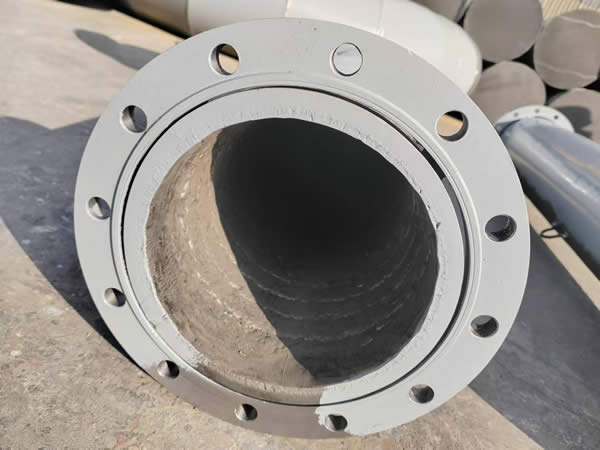
After 12 years executing pipeline projects across Southeast Asia, the Middle East, and Northeast Asia, I’ve seen countless profitable mining, cement, and dredging projects lose budget and downtime due to improper wear-resistant pipe selection and field application. Most B-side project managers and procurement teams focus only on initial pipe prices instead of matching pipe performance with local climate and slurry working conditions. A misselected abrasion-resistant pipe can lead to monthly leakage, elbow perforation, and unplanned shutdowns that cost far more than the pipe itself. This field guide shares practical, project-tested experience to help overseas engineering and procurement teams make reliable, cost-effective pipeline decisions for long-term industrial operation.
1. Core Industrial Application Value of Wear-Resistant Pipeline
Wear-resistant pipeline is no longer a simple auxiliary industrial part; it is a core guarantee for the stable operation of medium and heavy-duty material conveying systems. Unlike ordinary seamless steel pipes that fail quickly under high-speed particle impact and corrosive medium scouring, professional wear-resistant pipe is customized for harsh industrial working conditions, solving the two biggest pain points of pipeline operation: rapid wall thinning and sudden pipe burst leakage.
In global industrial projects, its scenario value is highly differentiated by industry. For mining projects, it transports abrasive ore slurry and coarse gravel, resisting continuous impact from solid particles. For cement and metallurgy plants, it handles high-temperature dust and clinker conveying, adapting to long-term high-load operation. For port and dredging projects, it copes with high-concentration sediment and seawater mixed media, avoiding pipeline blockage and corrosion damage. In chemical factories, it resists weak acid and alkali medium scouring to extend service life.
Combined with regional working conditions, its practical value is more prominent. In Southeast Asian mining and river dredging projects, high temperature, high humidity, and acidic mine water will corrode ordinary steel pipes from the inside out, while qualified wear-resistant pipeline integrates anti-abrasion and anti-corrosion performance to adapt to rainy season mud conveying. In Middle East quarry and thermal power projects, long-term strong sunlight exposure and sandstorm erosion accelerate surface aging of ordinary pipes, and wear-resistant pipe’s reinforced structure effectively resists dry heat and particle scouring. In Japanese and Korean precision chemical and power projects, it meets strict JIS and KS standard requirements for low failure rate and high operational stability in narrow installation spaces.
2. Mainstream Wear-Resistant Pipe Material Analysis & Regional Adaptability
Most procurement failures stem from blind selection of pipe materials without matching local climate and conveying media. Each mainstream wear-resistant material has obvious advantages and limitations, and there is no universal best material—only the most suitable one for regional working conditions. Based on my overseas project experience, I sort out the practical performance of three mainstream materials and their applicable regions and scenarios.
2.1 Ceramic-Lined Pipe: Best for Fine Slurry & Humid Coastal Areas
Ceramic-lined pipe is the most widely used abrasion-resistant pipe in fine material conveying scenarios. Its inner lining is made of high-alumina ceramic layers sintered at high temperature, with ultra-high hardness, excellent anti-scouring performance, and smooth inner wall that effectively reduces pipeline blockage. The outer carbon steel pipe ensures overall structural strength, balancing wear resistance and pressure resistance.
Engineer’s Pitfall Reminder: Many buyers only focus on ceramic hardness and ignore the bonding process. In Southeast Asia’s high-humidity and salt-spray coastal projects, inferior ceramic lining will peel off due to glue failure within 3–6 months, causing pipeline blockage. Qualified ceramic-lined pipe uses high-temperature inorganic bonding technology, which can stably adapt to 85**+ annual humidity and coastal salt spray environments.
This material is very suitable for Southeast Asian river dredging, chemical slurry conveying, and coastal port projects, but it is not recommended for Middle East open-air mining scenarios with frequent violent particle impact, as ceramic layers are prone to cracking under strong single-point impact.
2.2 Double-Metal Wear-Resistant Pipe: Tailored for Middle East Dry & High-Impact Working Conditions
Double-metal wear-resistant pipe adopts outer ordinary carbon steel pipe + inner high-chromium alloy wear-resistant layer, with integrated casting and composite molding. It has strong impact resistance, high-temperature resistance, and anti-extrusion ability, solving the core problem of large-particle ore impact damage.
In the Middle East’s dry and hot climate (long-term temperature above 45℃), ordinary alloy pipes are prone to thermal deformation and accelerated aging. The high-chromium alloy layer of double-metal pipe has stable thermal expansion coefficient, which can effectively resist thermal expansion and contraction caused by extreme temperature differences, and avoid flange sealing failure and pipe body cracking. In addition, its thickened wear layer can resist continuous sandstorm scouring in open-air mining and quarry projects.
2.3 Rubber-Lined Wear Pipe: Professional for Corrosive Acidic Media
Rubber-lined pipe is mainly used for conveying acidic, alkaline, and corrosive mixed media. The internal rubber layer isolates the steel pipe from corrosive media, avoiding electrochemical corrosion. It is widely used in chemical and mineral processing projects with acidic mine water.
Engineer’s Pitfall Reminder: This material is strictly prohibited for high-temperature scenarios. In Middle East open-air projects, direct sunlight will age and crack the rubber lining in a short time. It is only suitable for indoor or shaded low-temperature corrosive working conditions, especially for Southeast Asian underground mining with perennial humid and acidic water quality.
3. Full Category Classification & Scenario-Specific Adaptation Rules
Wear-resistant pipeline systems are not limited to straight pipes; complete supporting pipe fittings determine the overall operational stability of the conveying system. In actual overseas projects, 70** of pipeline failures occur at elbows, tees, and reducing pipes rather than straight pipe sections. I classify common product types and their exclusive adaptation scenarios for B-end procurement reference.
3.1 Straight Pipe: Main Pipeline Conveying Section
Wear-resistant straight pipe is the basic component of slurry pipeline systems, used for long-distance horizontal and vertical material conveying. According to connection methods, it is divided into welding type, flange type, and clamp type. Welding type is suitable for fixed outdoor pipelines in Middle East mining projects with high wind and sand; flange type is convenient for later disassembly and maintenance, matching Japanese and Korean projects’ refined operation and maintenance requirements; clamp type is suitable for temporary short-term projects and rapid on-site installation.
3.2 Wear-Resistant Elbow: Vulnerable Part for Particle Impact
The wear-resistant elbow is the most vulnerable part of the entire pipeline system, as material particles produce concentrated impact and scouring at the bending angle. For large-particle ore conveying in mines and aggregate conveying in quarries, thickened double-metal elbows must be selected. For fine slurry dredging projects in Southeast Asia, ceramic-lined elbows are more cost-effective with lower resistance and no blockage.
3.3 Tees & Reducers: Special Parts for Branch Conveying
Tees are used for pipeline shunting and confluence, and reducers are used for adjusting conveying flow and pressure. These parts have complex internal flow fields and are prone to local wear and blockage. In Japanese and Korean projects with strict flow control standards, customized precision-sized tees and reducers are required to meet JIS G 3459 pipeline system specifications and avoid flow pressure loss exceeding the standard.
4. Overseas Procurement Key Points for Southeast Asia, Middle East and Japan & Korea
Domestic procurement logic is completely inapplicable to overseas industrial pipeline projects. Different regional climate environments, industry standards, and project acceptance rules will directly affect pipe selection, packaging, transportation, and on-site acceptance. Based on years of regional project experience, I summarize targeted procurement avoidance points.
4.1 Southeast Asia: Anti-Rust, Anti-Corrosion & Rainy Season Adaptation
Southeast Asia features high temperature, high humidity, perennial rainy seasons, and coastal salt spray erosion. In procurement, first, pay attention to factory packaging: ordinary plastic packaging will be damp and rusty during long-term sea transportation. Qualified suppliers need to adopt waterproof and moisture-proof wooden box packaging + overall anti-rust oil coating. Second, priority should be given to pipes with integrated anti-corrosion and wear resistance, to avoid outer pipe rust penetration caused by salt spray, which affects structural strength. In addition, for rainy season mud conveying projects, the inner wall must be smooth to prevent slurry adhesion and pipeline blockage.
4.2 Middle East: Heat Resistance, Dust Prevention & Thermal Expansion Control
Middle East projects face extreme dry heat, strong sunlight, and frequent sandstorms. Procurement must focus on high-temperature resistance and structural stability. The pipe body and flange sealing parts must adopt high-temperature resistant materials to avoid sealing failure caused by thermal expansion and contraction. The outer surface of the pipe needs anti-ultraviolet coating to prevent aging and peeling caused by long-term sunlight. For open-air pipeline supports and connecting parts, dust-proof design is required to avoid sand accumulation causing pipeline local stress deformation.
4.3 Japan & Korea: Standard Compliance & Precision Installation Matching
Japanese and Korean industrial projects are famous for strict standards and refined management. All wear-resistant pipeline products must meet local JIS G 3459 and KS D 3562 standards, with complete factory test reports and qualification documents. In terms of on-site adaptation, local project installation space is narrow, so customized fixed-size pipes are required to reduce on-site cutting and modification. At the same time, the pipeline needs to match professional seismic supports to adapt to regional seismic design requirements, and the acceptance standard for pipe wall thickness and wear layer uniformity is far higher than international general standards.
5. High-Frequency Wear-Resistant Pipe Selection Misconceptions (Exclusive Extended Section)
In my overseas project commissioning experience, most pipeline operation failures are not caused by product quality problems, but by systematic selection misconceptions of procurement and engineering teams. I summarize two most common high-frequency misconceptions that plague B-end projects, with targeted correction schemes.
5.1 Misconception 1: Higher Hardness Equals Longer Service Life
Many buyers simply take material hardness as the only selection index, blindly pursuing ultra-high hardness wear-resistant materials, which leads to increased costs and reduced operational stability. In fact, hardness only represents anti-scouring ability, while pipeline service life is also affected by impact resistance, thermal stability, and medium adaptability.
For example, ultra-high hardness ceramic-lined pipe performs well in fine slurry anti-scouring, but it is easy to crack and fail when conveying large-particle ore with strong impact. In Middle East open-air projects, ultra-high hardness alloy pipes with poor thermal stability will have accelerated fatigue aging under extreme temperature differences. The correct selection logic is to match hardness and toughness according to particle size, impact strength, and ambient temperature, rather than one-sided pursuit of high hardness.
5.2 Misconception 2: Universal Pipes Are Suitable for All Regional Working Conditions
Many trading companies and small suppliers promote universal wear-resistant pipe products, claiming that they can adapt to all industrial scenarios and regional climates. This is a typical misleading sales logic. The same type of abrasion-resistant pipe will have completely different service life in different regions.
A standard ordinary ceramic-lined pipe that can work stably for 3 years in inland temperate regions may suffer lining peeling and corrosion failure in only 1 year in Southeast Asian high-salt-spray coastal areas. Ordinary double-metal pipes suitable for temperate zones will have thermal deformation risks in Middle East extreme heat. Professional project selection must carry out regional customized optimization according to local humidity, temperature, medium characteristics, and climate environment, which is the core key to reducing later operation and maintenance costs.
6. Daily Operation & Maintenance Rules for Long-Term Stable Operation
Good selection and installation need standardized maintenance to guarantee long-term operation. For industrial slurry pipeline systems, scientific daily inspection and maintenance can extend the service life of wear-resistant pipe by 30**–50** and avoid sudden shutdown losses.
Regular Thickness Inspection: Focus on regular wall thickness measurement of vulnerable parts such as elbows and tees. For Southeast Asian dredging and mining pipelines with long-term slurry scouring, measure the wall thickness once a quarter; for Middle East high-impact ore conveying pipelines, conduct a comprehensive thickness test every six months to judge the wear degree and reserve replacement parts in advance.
Anti-Rust & Anti-Fouling Maintenance: In high-humidity Southeast Asian regions, regularly clean the outer pipe surface and supplement anti-rust coating to avoid salt spray corrosion. For pipelines prone to slurry adhesion, conduct regular online cleaning to prevent inner wall scaling and blockage, which will cause increased flow pressure loss and reduced conveying efficiency.
Local Repair & Replacement: For local wear and minor damage of pipeline fittings, adopt targeted repair welding and lining repair instead of overall pipeline replacement. For severely worn elbows and tees, replace them in off-peak maintenance periods to avoid emergency shutdowns caused by sudden failure.
7. Conclusion: Precise Selection Creates Low-Consumption Pipeline System
The stable operation of industrial pipeline systems depends on the precise matching of wear-resistant pipe, working conditions, and regional environments, rather than blind price competition and random selection. From material selection, category matching, regional adaptive procurement to daily maintenance, every link determines the overall operation cost and service life of the pipeline. Ceramic-lined pipe, double-metal composite pipe, and various supporting wear-resistant elbow products have their own exclusive scenarios. Only by combining local climate characteristics, conveying medium, and project standards can we avoid procurement pitfalls and reduce long-term operating costs.
For mining, cement, dredging, and chemical projects in Southeast Asia, the Middle East, and Japan & Korea, customized wear-resistant pipe solutions are the core of efficient and stable operation. As a professional wear-resistant pipe supplier in Southeast Asia and the Middle East, we focus on regional working condition adaptation and project standardized matching, providing B-end customers with one-stop pipeline procurement and technical support services.