Field Engineer s Guide to Wear-Resistant Pipe Selection Regional Adaptation amp Common Mistakes
Field Engineer’s Guide to Wear-Resistant Pipe: Selection, Regional Adaptation & Common Mistakes
After 12 years of overseeing pipeline installation, commissioning, and after-sales projects across Southeast Asia, the Middle East, and Japan & South Korea, I’ve seen countless plant shutdowns and unexpected maintenance losses caused by improperly specified wear-resistant pipe. Most B2B procurement teams and project managers focus only on basic pipe pricing, ignoring regional climate differences, medium abrasion characteristics, and structural matching details. A standard abrasion-resistant pipe that works fine in European factories may fail in just 3–6 months in Southeast Asian mining or Middle Eastern cement plants. This practical guide shares on-site experience covering pipe classification, material performance, regional procurement rules, and critical selection mistakes to help you avoid costly project delays and repeated investment.
1. Core Application Value of Wear-Resistant Pipeline in Industrial Projects
Wear-resistant pipeline systems are the core conveying infrastructure for all high-abrasion industrial media, widely used in mining slurry transportation, power plant ash discharge, cement clinker delivery, port dredging, and gravel aggregate processing. Unlike ordinary seamless steel pipes, the core value of a wear-resistant pipeline lies in solving two major pain points: medium abrasion damage and frequent pipe replacement shutdowns. For large-scale industrial projects, pipeline wear failure is not just a replacement cost issue; sudden pipe leakage or rupture will lead to production suspension, material leakage, and even on-site safety accidents.
Combined with my regional project experience, this pipeline shows completely different application values in different Asian regions. In Southeast Asian coastal mines and dredging projects, high-temperature and high-humidity environments plus acidic slurry and sea salt fog easily corrode ordinary steel pipes while accelerating surface abrasion; qualified ceramic-lined pipe can extend the service life from 6 months to 5–8 years. In the Middle East’s dry and hot desert cement and metallurgical projects, strong sandstorm scouring and extreme temperature differences cause rapid aging of ordinary pipe wall materials, and customized wear-resistant elbow and straight pipe structures effectively resist wind-sand abrasion and thermal deformation. In Japan and South Korea’s refined chemical and power projects, wear-resistant pipeline meets strict JIS and KS standard requirements for stable conveying and low failure rate, adapting to their compact plant layout and high-frequency operational maintenance rules.
2. Full Category Classification & Scenario Matching Rules
Many procurement colleagues confuse pipe models and select unified specifications for all working conditions, which is the primary cause of pipeline premature failure. Based on on-site installation and operation experience, I classify mainstream wear-resistant pipe products by structure, shape, and connection mode, with clear scenario matching suggestions for B-end project selection.
2.1 Structural & Shape Classification
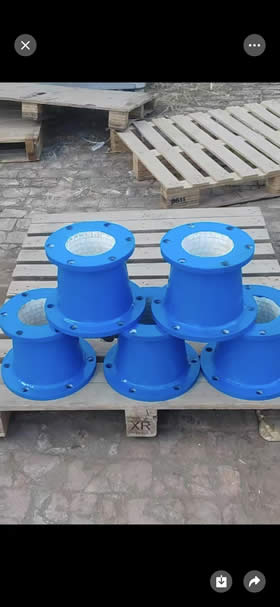
Conventional wear-resistant pipeline accessories include straight pipes, wear-resistant elbows, tees, reducers, and pipe caps. Among them, elbows are the most vulnerable parts in the entire conveying system, as slurry and granular materials produce impact and shear friction at the turning position. In gravel aggregate and mining slurry pipeline projects, thickened ceramic-lined elbows are mandatory for all turning sections, while straight pipes can adopt standard thickness specifications to control costs reasonably. Tees are suitable for shunt and confluence working conditions of power plant ash and chemical slurry, and reducers are mostly used for pipeline diameter conversion in process upgrading and reconstruction projects.
2.2 Connection Mode Adaptation
Three mainstream connection modes are widely used in overseas projects: flange connection, welding connection, and clamp connection. Flange connection is the first choice for Middle East and Southeast Asian outdoor exposed pipelines. It facilitates later disassembly, maintenance, and replacement of wear-resistant elbow and damaged pipe sections, and can be equipped with dust-proof gaskets to adapt to Middle Eastern sandstorm environments and prevent pipeline air leakage and dust invasion. Welding connection is suitable for buried pipelines and fixed pipe gallery facilities with high stability requirements, commonly used in Japanese and Korean closed factory pipeline systems. Clamp connection is applied to temporary construction pipelines and low-pressure slurry pipeline projects, with fast installation and no need for on-site welding.
3. Mainstream Wear-Resistant Pipe Material Performance & Regional Adaptation
Material selection determines 80** of the pipeline’s service life in specific working conditions. I will analyze the advantages, shortcomings, and applicable regional environments of several mainstream wear-resistant pipe materials based on actual project data, avoiding the one-sided parameter introduction of product manuals.
3.1 Ceramic-Lined Composite Pipe
This is the most widely used abrasion-resistant pipe in current high-abrasion working conditions, composed of an outer carbon steel pipe and an inner alumina ceramic wear-resistant layer. Its core advantages are ultra-high wear resistance, light weight, and low pipeline pressure loss, suitable for long-distance slurry pipeline transportation in mining, dredging, and chemical industries. The disadvantage is that the ceramic layer is brittle and prone to cracking under strong external impact and severe extrusion.
Regionally targeted adaptation: In Southeast Asia’s rainy season mud and mining acidic water working conditions, the ceramic layer is acid and corrosion resistant, which can effectively avoid the dual damage of corrosion and abrasion; but during sea transportation, the ceramic layer needs strict anti-collision and moisture-proof packaging to prevent bonding layer failure caused by high humidity. In Japanese and Korean refined projects that follow ASTM A106 and JIS G 3459 standards, high-purity ceramic-lined pipe with uniform lining thickness is required to meet strict factory acceptance standards.
3.2 Bimetallic Wear-Resistant Pipe
The inner layer is high-chromium alloy wear-resistant steel, and the outer layer is ordinary carbon steel. It has strong impact resistance and high-temperature resistance, suitable for high-temperature clinker conveying in cement plants and large-particle material conveying in metallurgical projects. The shortcoming is that the self-weight is large, the pipeline pressure loss is higher than that of ceramic-lined pipes, and the cost is relatively high.
Regionally targeted adaptation: It is the preferred material for Middle East desert cement projects. It can resist long-term sun exposure, dry heat aging, and strong sand impact, and its excellent thermal stability can adapt to the large temperature difference between day and night in desert areas, reducing pipeline deformation and cracking caused by thermal expansion and contraction.
4. Overseas Procurement Key Points for Southeast Asia, Middle East, Japan & Korea
Domestic conventional selection experience is completely not applicable to overseas projects. Each region has unique climatic environments, industry standards, and project acceptance rules. I have sorted out core procurement and selection避坑 points accumulated from hundreds of overseas pipeline projects.
4.1 Southeast Asia Procurement & Selection Rules
Southeast Asia’s core working condition characteristics are high temperature, high humidity, coastal salt fog, and rainy season muddy media. First, procurement pitfall reminder: Do not choose ordinary galvanized outer pipes for coastal projects. Salt fog will cause rapid rust and peeling of the outer pipe, leading to separation of the inner wear-resistant layer and the outer pipe. It is necessary to customize anti-rust and anti-corrosion coating for the outer pipe, and strengthen the anti-corrosion treatment of pipe gallery supports and flange connections. Second, for rainy season slurry conveying projects, prioritize wear-resistant pipe with anti-blocking smooth inner wall to avoid mud deposition and pipeline blockage caused by high water content media.
4.2 Middle East Project Procurement Standards
The Middle East is dominated by dry heat, strong sunlight, and sandstorm weather, with extremely high requirements for pipeline thermal stability and dust resistance. Second key engineer pitfall reminder: Do not ignore the thermal expansion and contraction coefficient of the pipe. Ordinary wear-resistant pipes are prone to flange deformation and seal failure under long-term high-temperature exposure. It is necessary to reserve expansion joints in the pipeline design and adopt high-temperature resistant rubber gaskets for flange parts to prevent sand dust from entering the pipeline gap. In addition, Middle East industrial projects have strict fire protection requirements, and all pipeline outer wall coatings must meet local fire protection standards.
4.3 Japan & Korea Refined Project Requirements
Japanese and Korean projects feature narrow installation space, strict seismic requirements, and super standardized acceptance, following JIS and KS industry standards. Procurement must strictly check pipe size tolerance, wall thickness uniformity, and welding seam quality. Unlike Southeast Asian and Middle East projects, their pipeline systems need matching seismic supports and limit structures, and the installation process requires fine polishing of welding seams to meet factory environmental and safety acceptance standards. Random sampling thickness testing and pressure testing are mandatory before delivery, with zero tolerance for unqualified products.
5. High-Frequency Wear-Resistant Pipe Selection Mistakes & Solutions (Exclusive Section)
In my years of after-sales service, more than 60** of pipeline operation failures stem from wrong selection rather than product quality problems. I summarize two most common low-level mistakes of B-end procurement and project teams, with targeted solutions for industrial projects.
5.1 Blindly Pursuing Low Unit Price, Ignoring Working Condition Matching
Many procurement teams take unit price as the core selection index and choose cheap thin-lined wear-resistant pipe for high-abrasion working conditions such as mining slurry and gravel conveying. The direct consequence is that the pipe wall is worn through in a short time, resulting in frequent replacement and higher comprehensive operating costs. For example, in Southeast Asian river dredging slurry pipeline projects, low-cost ordinary abrasion-resistant pipe can only operate stably for 2–3 months, while customized thickened ceramic-lined pipe can run for more than 6 years. The one-time procurement cost is increased by 30**, but the later maintenance and shutdown loss cost is reduced by more than 80**.
Correct solution: Take comprehensive service life and operating cost as the selection standard. Communicate on-site medium particle size, flow rate, temperature, and operating hours with the supplier in advance, and let engineers customize pipe wall thickness and lining materials instead of choosing fixed standard products blindly.
5.2 Uniform Specification Matching, Ignoring Localized Environmental Differences
Many project teams adopt a one-size-fits-all selection scheme, using the same pipeline specifications for all regional projects. For example, applying standard indoor pipeline specifications to Middle East outdoor sun-exposed environments and Southeast Asian coastal salt fog environments will lead to accelerated pipeline aging. Some teams also ignore the different standard systems of various regions, resulting in on-site installation mismatch and failure to pass acceptance.
Correct solution: Establish regional customized selection files. Increase anti-corrosion and salt-fog resistant coatings for Southeast Asian coastal projects, optimize thermal expansion structure and dust-proof design for Middle East projects, and strictly follow JIS/KS standard size tolerances and seismic matching requirements for Japanese and Korean projects.
6. Daily Operation & Maintenance Guidelines for Long-Term Stable Operation
Good maintenance can double the service life of wear-resistant pipeline systems. Combined with on-site operation experience, I sort out targeted maintenance rules for different regional working conditions, suitable for plant operation and maintenance teams to implement daily management.
For Southeast Asian projects: Regularly check the anti-corrosion coating of the outer pipe and pipe gallery supports every quarter, clean the surface salt fog and dirt, and repair peeled coatings in time to avoid local corrosion diffusion. For slurry pipeline systems, conduct monthly pipeline blockage inspection to clean residual mud deposits.
For Middle East desert projects: Regularly clean the dust and sand accumulated on the pipeline surface and flange gaps every month, check the tightness of flange seals, and replace aging high-temperature gaskets regularly. Check pipeline expansion joints in summer high temperature periods to avoid pipeline deformation caused by thermal expansion.
For Japanese and Korean refined projects: Adopt weekly fixed-point thickness measurement and flaw detection for key wear parts such as wear-resistant elbows, record pipeline wear data, and formulate a predictive replacement plan to avoid sudden failure. Regularly check the stability of seismic supports to ensure compliance with operational safety standards.
7. Conclusion
Selecting a suitable wear-resistant pipe is never a simple model matching work, but a systematic decision combining working condition characteristics, regional climate, project standards, and later maintenance costs. Ceramic-lined pipe, bimetallic abrasion-resistant pipe, and supporting wear-resistant elbow accessories have their unique applicable scenarios, and only targeted customized selection can maximize project benefits. For Southeast Asian mining and dredging, Middle East cement and metallurgy, and Japanese and Korean refined chemical projects, localized selection and procurement rules are the core of avoiding project risks. If you are looking for a reliable wear-resistant pipe supplier in Southeast Asia that can provide regional customized solutions and one-stop engineering supporting services, focus on products that adapt to local high temperature, high humidity and salt fog working conditions, and standardized overseas project delivery systems.