Wear-Resistant Pipe Field Selection Material Guide and Regional Application Tips for Global Industrial Projects
Wear-Resistant Pipe: Field Selection, Material Guide and Regional Application Tips for Global Industrial Projects
Introduction: Field-Proven Wear-Resistant Pipe Application in Global Heavy Industries
After 12 years of overseeing pipeline installation, commissioning, and procurement support for mining, power plant, cement, and dredging projects across Southeast Asia, the Middle East, and Japan & South Korea, I’ve seen countless project delays and budget overruns caused by poorly selected wear-resistant pipe systems. Most B-side buyers and project managers focus only on upfront pipe costs, ignoring regional climatic conditions, slurry medium characteristics, and long-term wear failure risks. A qualified abrasion-resistant pipe solution never relies on universal standards but targeted matching with local working conditions. In this article, I share real field experience, practical selection logic, cross-regional procurement pitfalls, and common operational mistakes to help engineering teams avoid unnecessary losses in pipeline system construction and maintenance.
Different from generic product manuals, all the content below is summarized from on-site debugging, failure analysis, and after-sales optimization of overseas industrial projects, covering core application scenarios of wear-resistant pipeline in heavy industry, material adaptability differences, and targeted operation strategies for different global regions.
Core Types of Wear-Resistant Pipeline and Scenario Adaptation
Industrial slurry pipeline systems are not one-size-fits-all. Each type of wear-resistant pipe has its unique structural advantages and applicable working conditions, and mismatching is the primary cause of short service life and frequent replacement. Based on years of overseas project practice, I classify mainstream products by structure, function, and connection mode, with clear scenario positioning for global industrial projects.
Structural Classification and Industrial Matching
Straight pipes are the most basic components, mainly used for long-distance material transmission in mine slurry transportation, coal washing plants, and river dredging projects. Wear-resistant elbow and tee are vulnerable parts with the highest failure rate, as material impact and friction are concentrated at pipeline turning and shunting positions. In gravel aggregate and cement powder conveying projects, elbows often wear through 3–6 times faster than straight pipes, requiring enhanced wear-resistant design.
Reducer pipes are widely used in variable-diameter material transmission systems of chemical and metallurgical projects, where uneven flow velocity easily causes partial wear. For terminal discharge positions of port dredging pipelines, customized reducing wear-resistant pipe is always the preferred solution to balance flow pressure and reduce local abrasion.
Mainstream Wear-Resistant Material Structure Types
- Ceramic-lined pipe: Features high hardness, anti-corrosion, and smooth inner wall, suitable for fine slurry, powder, and low-impact material transmission. It performs stably in high-humidity and slightly acidic environments in Southeast Asia and is the most cost-effective solution for cement plant powder conveying.
- Double-metal composite pipe: Adopts outer seamless steel pipe + high-alloy wear-resistant inner layer structure, with strong impact resistance and pressure resistance. It is the mainstream choice for Middle East mining coarse ore slurry transmission with large particle size and high impact force.
- Hardfacing wear-resistant pipe: Formed by surfacing high-chromium alloy on the inner wall, with customizable wear layer thickness, suitable for high-abrasion working conditions of metallurgical slag and coarse sand transmission.
- High-chromium cast iron pipe: Integral casting molding, excellent overall wear resistance, but slightly poor toughness, mostly used for fixed pipeline sections of thermal power plant ash and slag transmission.
Connection Mode Selection for Overseas Projects
Welding, flange connection, and clamp connection are three mainstream modes. Flange connection is preferred for Middle East outdoor exposed pipelines, which facilitates later disassembly, maintenance, and dust sealing. Welding connection is suitable for narrow installation spaces in Japanese and Korean industrial parks, meeting local seismic support and overall pipeline stability requirements. Clamp connection is widely used for temporary dredging pipelines in Southeast Asia, improving on-site installation efficiency.
Mainstream Wear-Resistant Pipe Material Performance Analysis (Advantages & Limitations)
Material selection determines 80** of the service life of wear-resistant pipeline systems. Many engineering teams only refer to standard parameters without combining regional climate and medium characteristics, leading to good laboratory parameters but poor on-site performance. I’ve sorted out the actual performance of several core materials in overseas projects for reference.
Ceramic Liner & Carbon Steel Outer Pipe Combination
The inner liner adopts high-purity alumina ceramic, with a Rockwell hardness of HRA88–92, excellent anti-abrasion and anti-corrosion performance, and effectively resists acidic mine water corrosion in Southeast Asian rainy seasons. The outer pipe usually adopts ASTM A106 seamless steel pipe, with stable pressure resistance and good mechanical strength. The biggest advantage is low pipeline pressure loss and smooth material transmission, which can reduce system operating power consumption.
Its limitation is poor resistance to strong impact. In Middle East dry mining projects with large ore particle size, ceramic lining is prone to cracking and peeling under long-term heavy impact, so it is not suitable for coarse material transmission working conditions.
High-Chromium Alloy Wear Layer & Alloy Steel Outer Pipe
The high-chromium alloy wear layer has strong impact resistance and abrasion resistance, adapting to high-load working conditions such as metallurgical slag and coarse gravel transmission. The alloy steel outer pipe has excellent thermal stability, which can effectively cope with the extreme temperature difference of day and night in the Middle East, avoiding pipeline deformation and seal failure caused by thermal expansion and cold contraction.
The disadvantage is that the inner wall roughness is slightly higher than that of ceramic-lined pipe, and the pressure loss is relatively large during long-term slurry transmission. In addition, the cost is higher, so it is more suitable for key vulnerable sections rather than full-pipeline use.
Regional Working Condition Adaptation: Southeast Asia, Middle East, Japan & Korea On-Site Matching Rules
The same batch of wear-resistant elbow and straight pipe that works well in China may fail quickly in overseas projects, entirely due to ignoring regional exclusive working condition characteristics. Based on long-term cross-border project service experience, I summarize targeted selection and adaptation strategies for three core regions.
Southeast Asia: High Temperature, High Humidity and Acidic Working Condition Adaptation
Southeast Asian mining and dredging projects are characterized by perennial high temperature and high humidity, frequent rainy seasons, and widespread acidic mine water and muddy slurry. Ordinary carbon steel pipelines are prone to salt fog corrosion and electrochemical rusting, and the outer pipe will rust and peel within half a year, even if the inner wear layer is intact. In addition, long-distance sea transportation leads to damp packaging, and unpreserved pipe ends are easy to corrode before installation.
Engineer’s Pitfall Reminder: Never use uncoated ordinary wear-resistant pipes for Southeast Asian projects. The outer pipe must be treated with anti-rust paint and salt-fog resistant coating, and pipe ends need sealed packaging. For acidic slurry working conditions, priority should be given to ceramic-lined pipe with acid-resistant inner layer to avoid medium corrosion penetrating the wear layer.
Middle East: Dry Heat, Sand Abrasion and Extreme Temperature Adaptation
The Middle East has a dry and hot climate, with long-term sun exposure, surface temperature exceeding 50℃ in summer, and severe sand and dust weather. Outdoor pipelines face two core risks: external sand abrasion and thermal expansion and contraction deformation. Long-term sand blowing will continuously wear the outer pipe protective layer, and large temperature difference between day and night will cause repeated expansion and contraction of flange connections, leading to dust leakage and seal failure.
In addition, Middle East industrial projects have strict fire protection requirements, so pipeline materials must meet local fire resistance standards, and organic composite materials that are easy to burn are prohibited. For open-pit mining slurry pipelines, double-metal wear-resistant pipe is the most reliable choice, with high temperature resistance and strong external weathering resistance.
Japan & South Korea: Standardized Construction and Seismic Working Condition Adaptation
Japanese and Korean industrial projects feature refined management, narrow on-site installation space, and strict seismic protection requirements. All pipelines must comply with JIS G 3459 and KS D 3562 industry standards, with extremely strict acceptance standards for pipe dimensional accuracy, welding seam quality, and connection tightness. Different from Southeast Asian and Middle East projects, their pipeline failure is rarely caused by material abrasion, but by unqualified installation and non-compliant support fixing.
Local projects must be equipped with professional seismic brackets, and the pipeline reserved expansion gap must strictly follow standard calculations. Non-standard customized wear-resistant pipe is difficult to pass project acceptance, so full standard parameter matching is required in the procurement stage.
Overseas B2B Procurement Key Points: Budget, Acceptance and Cross-Border Avoidance Strategies
Most overseas project procurement failures are not due to product quality problems, but inappropriate procurement strategies and ignored hidden risks. As a B2B procurement consultant with many years of cross-border experience, I sort out core procurement avoidance points for three regions.
Regional Procurement Differentiation Strategy
Southeast Asian projects are mostly cost-sensitive, with moderate working condition requirements. Procurement can prioritize cost-effective ceramic-lined wear-resistant pipe, focus on salt fog anti-corrosion treatment and sea transportation packaging, and avoid additional maintenance costs caused by transportation rust.
Middle East projects focus on stability and safety, with sufficient project budgets. It is necessary to prioritize high-strength double-metal and hardfacing wear-resistant pipeline, focus on high temperature resistance, dust sealing and fire protection performance, and avoid frequent shutdown maintenance caused by pipeline failure.
Japanese and Korean projects take standard compliance as the core. Procurement must verify material test reports, standard certification documents, and dimensional tolerance data one by one. Any non-standard detail will lead to overall acceptance failure and project delay.
Core Procurement Pitfall Reminders
Engineer’s Pitfall Reminder: Do not simply pursue low unit price in cross-border procurement. Many low-cost wear-resistant pipes lack stable wear layer bonding process, which will cause layer peeling within 1–2 years of use, and the overall replacement cost is far higher than the initial procurement savings.
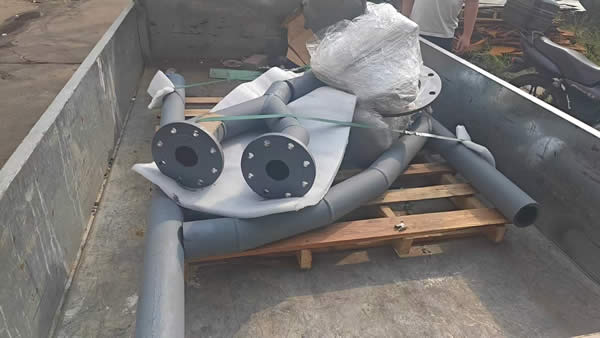
In addition, cross-border transportation must confirm the overall packaging scheme of vulnerable parts such as wear-resistant elbow. Vulnerable accessories without independent packaging are easily damaged in sea transportation, resulting in insufficient on-site spare parts and affecting project construction progress.
Exclusive: High-Frequency Wear-Resistant Pipe Selection Misunderstandings (Field Verified)
After sorting out hundreds of overseas pipeline project failure cases, I found that more than 70** of pipeline premature wear and failure comes from typical selection misunderstandings, not product quality defects. These common errors are not mentioned in product manuals, but are key points that must be mastered by project engineers and procurement personnel.
Misunderstanding 1: The Harder the Wear Layer, the Better the Adaptability
Many buyers simply equate high hardness with high service life and blindly choose ultra-high hardness ceramic-lined pipe for all working conditions. In fact, hardness and toughness are balanced. Ceramic lining has ultra-high hardness but poor impact resistance; for Middle East mining coarse ore and high-impact slurry transmission, ultra-hard ceramic lining will crack and peel under continuous material impact, while moderately hard and high-tough double-metal wear-resistant pipe can achieve longer service life.
Hardness is only suitable for low-impact, fine-particle, corrosive working conditions such as chemical slurry and cement powder. For high-impact coarse material working conditions, impact toughness is the core evaluation index.
Misunderstanding 2: Uniform Pipe Wall Thickness Equals Uniform Wear Resistance
Most customers judge product quality by measuring the uniform wall thickness of straight pipes, ignoring the uneven wear characteristics of pipeline operation. In actual industrial operation, pipeline elbows, tees and shunting positions bear far greater friction and impact than straight pipe sections, and local wear is extremely serious.
Many manufacturers produce uniform-thickness pipes to reduce costs, which leads to rapid wear of vulnerable parts. The correct selection scheme is to adopt thickened wear layer for elbows and tees and match conventional thickness straight pipes in a targeted manner, which can balance project cost and overall pipeline service life, avoiding frequent replacement of local vulnerable parts.
Daily Operation and Maintenance Rules for Global Industrial Wear-Resistant Pipeline
Scientific daily maintenance can extend the service life of abrasion-resistant pipe by more than 40**, which is an important link easily ignored by overseas project teams. Combined with the maintenance characteristics of different regional projects, I summarize targeted operation and maintenance strategies.
For Southeast Asian projects, the core maintenance focus is anti-corrosion and rust removal. Regularly check the outer pipe coating and pipe bracket corrosion, repair peeling anti-rust paint in time, and drain accumulated water in the pipe gallery after rainy seasons to avoid long-term damp corrosion of the pipeline base.
For Middle East outdoor pipelines, regular dust cleaning and flange sealing inspection are required. Long-term sand accumulation will shield heat dissipation and accelerate outer pipe aging; regular tightening of flange bolts can prevent dust leakage caused by thermal expansion and contraction. In addition, idle pipelines in summer need sun-shading protection to reduce high-temperature aging.
For Japanese and Korean refined operation projects, regular wall thickness detection and data recording are required. Strictly follow project standards for periodic thickness measurement of vulnerable sections, form maintenance files, and replace aging wear-resistant elbow and local wear sections in advance to avoid sudden pipeline failure.
In terms of daily management, pipeline storage must avoid open-air stacking in high-humidity and saline-alkali environments, and pipe ends must be sealed to prevent sundries from entering and causing pipeline blockage and local wear during operation.
Conclusion
Selecting and using wear-resistant pipe for global industrial projects is a systematic work that integrates material performance, regional working conditions, procurement strategy and daily maintenance. There is no universal best pipeline product, only the most matched solution. Ceramic-lined pipe, double-metal composite pipeline and other mainstream products have their exclusive applicable scenarios in Southeast Asian dredging, Middle East mining, and Japanese and Korean refined industrial projects.
For overseas project procurement and engineering teams, abandoning stereotyped selection experience and adopting regionally targeted matching schemes is the core to reduce pipeline failure rate and control long-term project costs. As a professional wear-resistant pipe supplier in Southeast Asia and the Middle East, we have accumulated rich field experience in cross-regional pipeline adaptation, helping global industrial projects realize stable and long-term operation of slurry pipeline systems.