Wear-Resistant Pipe Performance Maintenance and Hidden Cost Tips for Global Aggregate Projects
Wear-Resistant Pipe Performance, Maintenance and Hidden Cost Tips for Global Aggregate Projects
After 11 years of field servicing industrial piping projects across Southeast Asia, the Middle East, and Japan and South Korea, I’ve seen countless aggregate and quarry operations lose tens of thousands of dollars annually due to overlooked pipe performance gaps and hidden project costs. Choosing the right wear-resistant pipe for slurry and aggregate conveying is never just a material pick—it’s a decision that defines your system uptime and long-term budget. Most standard industrial pipe failures in overseas projects stem from ignoring regional climate traits and skipping detailed acceptance checks, rather than poor product quality itself.
1. Structural Design & Internal Construction of Industrial Wear-Resistant Pipeline
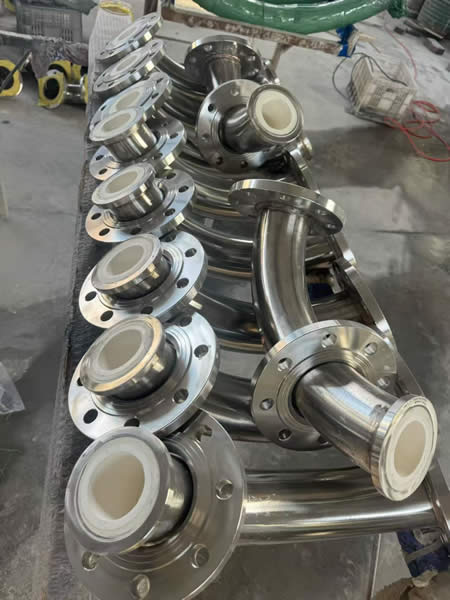
A qualified wear-resistant pipeline for quarry and mineral processing work is a multi-layer composite structure, not a single thickened steel tube. Every structural layer is designed to tackle specific abrasion, pressure, and climate challenges in overseas industrial sites. Understanding these internal components helps project teams avoid blind selection and identify unqualified low-end products during procurement.
The outermost layer is a seamless carbon steel outer pipe, usually compliant with ASTM A106 or API 5L standards. This layer provides overall structural rigidity, pressure resistance, and external environmental protection, resisting external impact, bracket pressure, and atmospheric corrosion on-site. The middle bonding layer acts as a bridge connecting the outer steel pipe and inner wear-resistant lining. A high-quality adhesive or metallurgical bonding layer ensures zero delamination even under frequent vibration and thermal expansion, a critical detail many cheap abrasion-resistant pipe manufacturers cut corners on.
The inner core is the wear-resistant functional layer, the key component that fights aggregate friction and slurry scouring. Depending on the working condition, this layer can be alumina ceramic, high-chromium cast iron, or polymer rubber. Matching with different connection methods—welded, flange, or clamp connection—makes the pipeline adaptable to various on-site installation conditions, whether it’s compact plant pipe galleries or open-air quarry conveying lines.
2. Core Performance & Operational Efficiency for Aggregate Conveying
For global sand and aggregate projects, pipeline performance directly determines production efficiency. I always evaluate wear-resistant pipe performance from five practical field indicators: service life, pressure tolerance, temperature resistance, flow pressure loss, and anti-blocking capability, all of which vary drastically across different regional working conditions.
Wear Life & Impact Resistance: Aggregate conveying involves continuous impact from sharp stone particles, far more abrasive than ordinary coal ash slurry. High-quality ceramic-lined pipe can maintain stable performance for 2–3 years in medium-duty quarry conditions, while ordinary steel pipes wear through in 3–6 months. For large-particle aggregate impact scenarios, high-chromium cast iron linings deliver better anti-impact performance than ceramic liners.
Temperature & Climate Adaptability: This is where regional differences matter most. Middle East quarry sites face persistent 45°C+ dry heat and intense sunlight, requiring pipelines to resist thermal aging and thermal expansion deformation. Southeast Asian aggregate plants operate in year-round high humidity and frequent rain, demanding excellent anti-corrosion and moisture-resistant performance. Japanese and Korean aggregate factories require pipelines to withstand frequent temperature fluctuations in closed workshops without performance attenuation.
Flow Efficiency & Anti-Blocking Performance: The smooth inner wall of qualified wear-resistant elbow and straight pipe reduces slurry flow resistance, effectively avoiding material deposition and pipe blockage—a common headache in high-viscosity rainy-season aggregate slurry in Southeast Asia. Low-pressure-loss design also cuts down long-term pump operating costs for the entire conveying system.
3. Regional Overseas Procurement Rules for Three Core Markets
Procuring wear-resistant pipeline for overseas aggregate projects cannot adopt a unified standard. Each region has unique climate risks, industry standards, and acceptance criteria that must be embedded in your procurement technical specifications. Below are my on-site verified procurement tips for Southeast Asia, the Middle East, and Japan-Korea markets.
Southeast Asia High-Humidity Quarry Sites: The biggest hidden risk here is salt fog corrosion and rainy-season acidic slurry erosion. Coastal aggregate plants in Thailand, Indonesia, and Vietnam suffer from pervasive salt fog in the air, which corrodes pipe brackets and outer steel pipe walls. Many buyers only check inner wear resistance and ignore outer anti-corrosion coating, leading to external rust penetration and pipeline failure. Additionally, rainy-season mud-rich aggregate slurry is weakly acidic, which accelerates lining wear on unmodified pipelines.
Middle East Dry & Sandy Mining Zones: Middle East projects face continuous sandstorm abrasion and extreme thermal expansion. Open-air aggregate conveying lines endure constant fine sand scouring on the outer pipe surface, while huge day-night temperature differences cause repeated expansion and contraction. This easily loosens flange seals and leads to pipeline air leakage and material leakage. Fire resistance is also mandatory for all pipelines in Middle East industrial zones to meet local industrial safety codes.
Japan & Korea Refined Aggregate Plants: These markets follow ultra-strict JIS G 3459 and KS D 3562 standards with zero tolerance for dimensional deviations. Factory pipe layouts are extremely compact, requiring customized short-length pipelines and integrated elbow-tee combinations. All piping systems must be equipped with certified seismic brackets to pass official project acceptance, a requirement rarely emphasized in other regions.
Engineer’s Pitfall Reminder 1: Never purchase standard-length wear-resistant pipe for Japan-Korea aggregate projects. Standard sizes will fail on-site installation and lead to full return and rework losses.
Engineer’s Pitfall Reminder 2: For Middle East open-air pipelines, always specify high-temperature resistant fluororubber flange gaskets. Ordinary rubber gaskets will age and fail within 3 months under continuous sun exposure.
4. Daily Inspection & Maintenance Practices for Long-Term Service Life
Even the highest-grade wear-resistant pipe requires standardized routine maintenance to maximize its service life, especially in harsh overseas regional environments. My maintenance strategy focuses on targeted inspection and partial replacement, avoiding full pipeline replacement waste for aggregate projects.
Regular wall thickness testing is the core of daily maintenance. Focus on wear-resistant elbow and tee sections, which bear 70** of aggregate impact and abrasion. For Southeast Asian sites, add monthly outer wall rust cleaning and anti-corrosion paint touch-up to prevent salt fog corrosion spread. For Middle East sites, conduct weekly flange gap cleaning to remove accumulated sand dust and avoid sealing failure.
Seasonal maintenance is also essential. During rainy seasons in Southeast Asia, empty residual slurry in pipelines to prevent acidic material deposition and inner wall corrosion. During extreme high-temperature seasons in the Middle East, check pipeline deformation caused by thermal expansion and adjust bracket fastening tightness. For long-term idle pipelines, fully seal both ends for moisture-proof storage to avoid internal lining damp aging.
5. Exclusive Guide: Acceptance Checklist & Hidden Project Costs
Most B-end buyers only check pipeline appearance and size during acceptance, ignoring hidden defects that trigger huge post-operation costs. Based on overseas aggregate project experience, I sort out key acceptance items and easily overlooked hidden costs to help buyers control project budgets effectively.
5.1 Key On-Site Acceptance Checklist for Wear-Resistant Pipeline
First, verify material certification and standard compliance. For Japan-Korea projects, confirm JIS/KS standard test reports; for Middle East and Southeast Asian international projects, confirm ISO 9001 quality certification and raw material component test data to prevent shoddy lining materials. Second, conduct on-site manual inspection of the bonding layer: tap the pipe wall evenly, and uniform sound indicates tight bonding, while hollow sound means delamination risks.
Third, focus on welding and connection details. All weld seams must be smooth without pores or cracks to avoid stress concentration and local wear. For flange-connected slurry pipeline, check flatness and gasket matching degree to prevent assembly gaps. Finally, conduct pressure resistance testing according to project design standards to eliminate hidden leakage dangers.
5.2 Easily Overlooked Hidden Costs in Pipeline Projects
The first hidden cost is unqualified sea transportation loss. Wear-resistant pipe shipped to Southeast Asian coastal projects is prone to salt fog rust and lining damp damage without professional moisture-proof packaging, resulting in on-site refurbishment costs or direct scrapping losses. Many suppliers cut packaging costs, passing hidden risks to buyers.
The second hidden cost is mismatched supporting accessories. Using ordinary pipe brackets for seismic-standard projects in Japan and Korea, or ordinary sealing parts for Middle East high-temperature environments, will cause frequent failure and repeated replacement costs, far exceeding the cost difference of high-quality accessories. The third hidden cost is unstandardized maintenance leading to shortened service life, which increases annual pipeline replacement and shutdown loss for aggregate production lines.
6. Conclusion
Selecting and maintaining a qualified wear-resistant pipe for global aggregate and quarry projects relies on systematic structural cognition, regional working condition adaptation, and standardized acceptance and maintenance. Ceramic-lined pipe and composite wear-resistant elbow deliver stable performance for aggregate slurry conveying, while targeted procurement and maintenance strategies for Southeast Asian high humidity, Middle Eastern dry heat, and Japan-Korea refined standards eliminate most pipeline failure risks.
By avoiding acceptance omissions and controlling hidden project costs, enterprises can greatly extend pipeline service life and reduce long-term operational investment. As a reliable provider of customized wear-resistant pipe for Southeast Asian quarry and aggregate projects, we deliver field-tailored piping solutions for global industrial B-end clients.