Wear-Resistant Pipe Selection Application and Pitfall Avoidance for Asia Mining and Industrial Projects
Wear-Resistant Pipe Selection, Application and Pitfall Avoidance for Asia Mining and Industrial Projects
For over a decade, I’ve troubleshooted and optimized slurry pipeline and wear-resistant pipe systems for mining, cement, power plant, and dredging projects across Southeast Asia, the Middle East, and Japan & South Korea. Most B-side project failures I’ve witnessed are not caused by poor product quality alone, but by mismatched material selection, ignored regional working conditions, and generic procurement decisions. Industrial pipeline abrasion is a silent project killer—it shortens service life, triggers frequent shutdowns, and blows up long-term maintenance budgets. In this field-based guide, I share practical, project-tested experience on wear-resistant pipe application, regional adaptation, core performance metrics, and common selection mistakes to help project managers and procurement engineers make cost-effective, failure-proof decisions for their industrial pipeline systems.
1. Core Value of Wear-Resistant Pipe in Cross-Regional Industrial Projects
Traditional carbon steel pipelines struggle to handle harsh industrial media like abrasive slurry, granular ore, high-temperature dust, and corrosive process water, which leads to rapid wall thinning, leakage, and frequent replacement. A qualified wear-resistant pipeline solves these core pain points by reinforcing vulnerable pipe sections, stabilizing long-term operation, and cutting down unplanned maintenance downtime. Its application value varies drastically across Asian regional projects, tailored to local climate and working conditions.
In Southeast Asian mining and dredging projects, high temperature, high humidity, acid mine water, and rainy-season muddy slurry create dual damage of abrasion and chemical corrosion. Ordinary steel pipes rust and wear through in 6–12 months, while matched abrasion-resistant pipe can extend service life by 5–8 times. Additionally, long-distance sea transportation exposes bare pipes to salt spray erosion, making anti-rust packaging and surface protection critical for offshore project delivery.
Middle Eastern power and cement plants face extreme dry heat, intense solar radiation, and constant sand dust scouring. Pipeline systems suffer from thermal expansion deformation and persistent fine particle abrasion; unprotected flanges and joints also accumulate sand dust, causing seal failure and leakage. Professional wear-resistant elbow and straight pipe configurations effectively resist dry abrasive wear and stabilize sealing performance under high-temperature alternating conditions.
For Japanese and South Korean metallurgical and chemical projects, strict industrial standards, compact installation space, and frequent seismic activity are core characteristics. Local projects strictly follow JIS G 3459 and KS D 3562 standards, requiring wear-resistant pipe systems with precise dimensional tolerance, anti-seismic bracket adaptability, and low failure rates for refined daily operation and maintenance.
2. Mainstream Wear-Resistant Pipe Material Performance Analysis & Adaptation
After participating in more than 80 cross-border industrial pipeline projects, I’ve found that no single wear-resistant material fits all scenarios. Each mainstream material has clear advantages, limitations, and targeted applicable media and regional climates. Blindly choosing high-cost materials or generic alternatives is the top cause of project waste and failure.
2.1 Ceramic-Lined Pipe
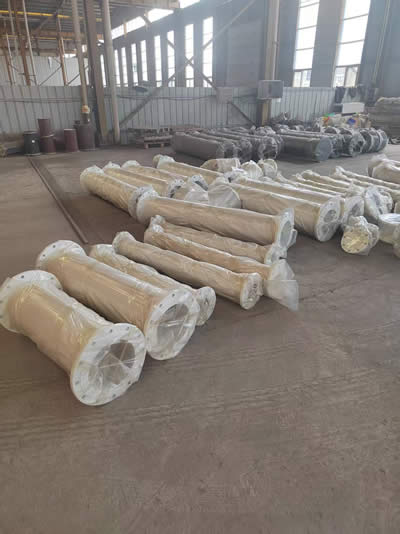
Ceramic-lined pipe is the most widely used solution for fine slurry and low-impact abrasion working conditions. Its inner alumina ceramic layer features high hardness, excellent anti-corrosion performance, and smooth inner wall that reduces pipeline pressure loss and slurry blockage risks. It adapts well to Southeast Asian acid slurry and chemical plant corrosive media, and performs stably under high-humidity environments without rapid oxidation failure. However, it has obvious weaknesses: poor impact resistance. In Middle Eastern mine coarse ore conveying scenarios with large particle impact, ceramic lining is prone to cracking and peeling. It also cannot withstand ultra-high temperature above 200°C for long-term continuous operation.
2.2 Double-Metal Composite Wear-Resistant Pipe
This pipe adopts carbon steel outer pipe + high-chromium alloy inner lining composite structure, balancing structural toughness and extreme abrasion resistance. The high-chromium cast iron lining resists strong impact and heavy abrasive wear, making it ideal for Middle East dry sand and gravel conveying, coal washing plant coarse particle slurry transportation. Its biggest advantage is stable thermal expansion performance, which adapts to Middle East day-night temperature difference and intense solar exposure, avoiding pipe body deformation and lining detachment. The only downside is heavier weight, which requires customized pipe support design for narrow installation spaces in Korean and Japanese refined projects.
2.3 Rubber & Polymer Lined Pipe
Polymer-lined wear-resistant pipe excels in anti-corrosion and anti-light abrasion performance, with good elasticity to buffer medium impact. It is widely used in chemical plant acid-base liquid conveying and port dredging low-concentration slurry projects. It works perfectly in Southeast Asian high-humidity and salt spray environments, effectively resisting electrochemical corrosion. But it is not suitable for Middle East long-term high-temperature exposure—ultra-violet radiation and high heat will accelerate rubber aging, hardening, and peeling, leading to early pipeline scrapping.
3. Key Performance Parameters Affecting On-Site Operational Efficiency
For industrial procurement and project design, surface parameters and nominal standards are not enough. On-site operational efficiency depends on practical performance indicators including wear life, pressure resistance, temperature tolerance, flow loss, and anti-blocking capability. These indicators directly determine pipeline operation stability and later maintenance frequency.
- Service Life & Abrasion Resistance: Measured by actual on-site scouring volume rather than laboratory data. Under Southeast Asian muddy slurry conditions, qualified ceramic-lined pipe achieves 3–5 years of stable service, while double-metal pipe reaches 6–8 years in Middle East dry abrasive working conditions.
- Pressure & Temperature Resistance: Most industrial pipelines bear 1.0–10.0MPa working pressure. Double-metal composite pipe supports high-pressure and high-temperature working conditions up to 350°C, suitable for power plant ash and slag conveying; polymer-lined pipe is limited to below 80°C low-temperature scenarios.
- Flow Stability & Anti-Blocking Performance: Smooth inner wall of ceramic wear-resistant pipeline reduces fluid resistance and slurry deposition, greatly lowering blockage probability in high-humidity and high-viscosity Southeast Asian slurry projects.
- Impact Resistance: Double-metal pipe outperforms ceramic and polymer materials in coarse particle impact resistance, becoming the preferred solution for mine ore and gravel aggregate conveying projects.
Engineer’s Pitfall Reminder: Never trust only laboratory wear test data. All material parameters must be verified combined with local climate and medium characteristics—laboratory standard data often deviates 30**+ from actual cross-regional project operation data.
4. Cross-Regional Overseas Procurement Key Rules & Avoidance Strategies
Overseas wear-resistant pipeline procurement differs hugely from domestic purchasing. Regional climate differences, local industrial standards, transportation risks, and acceptance rules will all affect project final quality. I have summarized targeted procurement experience for Southeast Asia, Middle East, and Northeast Asia after years of field service.
4.1 Southeast Asia Procurement Focus
High humidity, salt spray corrosion, and rainy season mud pollution are the biggest challenges. Procurement must prioritize products with enhanced anti-corrosion outer wall treatment; all pipes need integrated salt-spray resistant packaging for sea transportation to avoid surface rust before on-site installation. Meanwhile, reserve a certain number of wear-resistant elbow vulnerable parts, as slurry scours elbows most severely in dredging and mining projects.
4.2 Middle East Procurement Focus
Dry heat exposure, sand abrasion, and large temperature difference require priority selection of high-temperature resistant and thermal-stable pipe types. Flange connections must be matched with high-temperature dust-proof sealing gaskets to prevent sand ingress and sealing failure. In addition, Middle East industrial projects have strict fire protection requirements, so pipeline materials must meet local fire-resistant grade standards.
4.3 Japan & South Korea Procurement Focus
Projects in these two regions adopt ultra-strict refined management and unified JIS/KS industrial standards. Procurement specifications must fully comply with JIS G 3459 and KS D 3562 dimensional tolerances and material testing standards. Meanwhile, due to narrow on-site installation space and high seismic requirements, customized short-size pipes and matched anti-seismic supports are essential, and full factory inspection reports must be provided for project acceptance.
Engineer’s Pitfall Reminder: Do not apply unified procurement standards for all Asian projects. One-size-fits-all purchasing is the main reason for pipeline incompatibility, unqualified acceptance, and short service life in cross-border projects.
5. Daily Operation Maintenance & Fault Prevention for Long-Term Service Life
Even the highest-quality abrasion-resistant pipe will fail early without standardized daily maintenance. B-end projects focus on long-term operational cost control, and scientific maintenance can extend pipeline service life by 40**–60** and reduce unplanned shutdown losses.
- Regular Thickness Inspection & Monitoring: Focus on wear-resistant elbows, tees, and variable-diameter pipes with the most severe scouring. Conduct monthly thickness measurement for key sections in mining and dredging projects, and mark thinning parts for early replacement to avoid sudden leakage.
- Regional Targeted Maintenance: For Southeast Asian projects, regularly clean outer wall rust and drain accumulated water in pipe corridors to prevent salt spray and humid secondary corrosion; for Middle East projects, regularly clean sand and dust at flange joints to