Wear-Resistant Pipe Selection Guide Avoid Common Mistakes for Global Aggregate Projects
Wear-Resistant Pipe Selection Guide: Avoid Common Mistakes for Global Aggregate Projects
After a decade of troubleshooting pipeline failures for global aggregate, chemical, and port projects, I’ve noticed a recurring costly issue among overseas B2B buyers: most project failures stem from wrong wear-resistant pipe selection rather than poor product quality. Countless jobsites in Southeast Asia, the Middle East, and Japan-Korea face unplanned downtime because engineers pick generic abrasion-resistant pipe without factoring local climate and working condition differences. This hands-on guide shares real-site experience to break down practical pipe performance traits, regional procurement rules, daily maintenance tips, and the most frequent selection mistakes that cost projects thousands in hidden losses.
1. Performance & Efficiency of Industrial Wear-Resistant Pipeline
Field performance is the only true standard to judge a wear-resistant pipeline, far more reliable than factory parameter sheets. For heavy-duty industries like sand and aggregate processing, chemical slurry transportation, and port bulk material handling, core performance indicators directly determine pipeline service life and project operational efficiency. I’ve tested and verified these metrics across three major Asian regions, with distinct practical differences from lab data.
1.1 Wear Lifespan & Impact Resistance
Aggregate and gravel conveying involves high-speed collision and scouring of sharp stone particles, posing severe impact abrasion to pipelines. Standard carbon steel pipes only last 2–4 months in aggregate production lines. Qualified ceramic-lined pipe delivers 10–18 months of stable service, while bimetallic wear-resistant pipes withstand heavier impact, suitable for large-particle stone conveying. In Middle East open-air aggregate yards, continuous sandstorm secondary abrasion cuts pipe lifespan by nearly 20** if no external protective coating is applied.
1.2 Temperature & Pressure Bearing Capacity
Different regional climates test pipe temperature resistance differently. Middle East desert projects face extreme surface temperatures above 55°C in summer, requiring pipelines to resist thermal aging and thermal expansion deformation. Southeast Asian tropical high-temperature environments accelerate lining aging for low-quality polymer-lined pipes. For pressure resistance, all industrial slurry pipeline systems for chemical and aggregate projects must meet ASTM A106 pressure standards to avoid leakage under high-flow material conveying.
1.3 Flow Efficiency & Anti-Clog Performance
Many buyers ignore flow pressure loss, which raises long-term operational energy costs. The smooth inner wall of ceramic-lined pipe reduces material friction, ensuring stable flow and effectively preventing mud and fine stone deposition. This is critical for Southeast Asian rainy season construction, where high-viscosity muddy slurry easily clogs ordinary pipelines. Excellent anti-blocking performance cuts manual cleaning frequency and improves overall project operating efficiency.
Engineer’s Pitfall Reminder 1: Do not overemphasize wall thickness while ignoring inner wall smoothness. Thickened ordinary steel pipes wear fast and cause high flow resistance, increasing long-term energy consumption.
2. Mainstream Wear-Resistant Pipe Material Analysis & Regional Adaptation
No single wear-resistant material fits all global projects. Each mainstream pipe material has unique strengths and weaknesses, and its applicability changes drastically under different regional climates and working media. Based on years of overseas site debugging, I’ve sorted out the most practical material matching rules for Southeast Asia, Middle East, and Japan-Korea markets.
2.1 Self-Propagating Ceramic Composite Pipe
Self-propagating high-temperature synthetic ceramic pipes feature thin and uniform ceramic lining, strong adhesion, and excellent anti-abrasion performance for fine and medium particles. Their biggest advantage is light weight, which reduces installation load for narrow pipe trenches. However, they have weak resistance to violent mechanical impact and extreme temperature difference shock. This type of pipe is ideal for Japan and Korea’s refined aggregate and chemical projects, where installation space is limited and working conditions are stable, fully complying with JIS G 3459 pipeline standards.
2.2 Bimetallic Alloy Wear-Resistant Pipe
With high-hardness alloy inner layer and carbon steel outer layer, bimetallic pipes boast outstanding anti-impact and high-temperature resistance. They perfectly adapt to Middle East dry and hot aggregate projects, resisting both stone particle scouring and long-term sun exposure aging. The only downside is heavy weight and poor atmospheric corrosion resistance. In Southeast Asia’s high-humidity salt spray coastal areas, unprotected bimetallic pipe outer walls develop rust quickly, thinning the pipe body and weakening structural stability.
2.3 Polymer Rubber Lined Pipe
Rubber-lined pipes excel in acid and alkali corrosion resistance, making them the first choice for chemical slurry pipeline systems. They cushion particle impact and reduce pipeline noise. Yet they cannot withstand high temperature and strong ultraviolet radiation, so they are completely unsuitable for open-air laying in the Middle East. They perform stably in enclosed workshop environments in Southeast Asia and Japan-Korea, with good anti-clogging effects for viscous chemical media.
3. Overseas Procurement Rules for SEA, Middle East and Japan-Korea Projects
Overseas procurement is not just material purchasing, but climate and standard adaptation matching. Generic procurement schemes always lead to acceptance failures or early pipeline damage. Below are targeted procurement and selection tips summarized from overseas aggregate and chemical project experience.
3.1 Southeast Asia: High Humidity, Salt Spray & Acidic Mud Conditions
Southeast Asian coastal industrial zones feature year-round high temperature and humidity, strong salt spray corrosion, and acidic mine mud in rainy seasons. During procurement, all pipe flanges and connecting parts must adopt enhanced anti-rust treatment, and finished products need full sealed marine packaging to avoid rust during long sea transportation. Pipe gallery brackets are prone to electrochemical corrosion, so matched anti-corrosion fasteners are mandatory. For acidic aggregate slurry conveying, avoid ordinary carbon steel composite pipes, as acid media will accelerate lining peeling and pipe wall thinning.
3.2 Middle East: Dry Heat, Sand Abrasion & Strict Fire Protection
Middle East desert projects suffer from intense sun exposure, frequent sandstorms, and large day-night temperature differences. Fine sand particles cause persistent micro-abrasion on pipeline outer walls, while thermal expansion and contraction easily loosen flange seals. Procurement must prioritize pipes with UV-resistant and sand-proof outer coatings, and high-temperature resistant sealing gaskets for all flange connections. Additionally, local industrial projects enforce strict fire safety standards, so flammable organic lining pipes are prohibited for outdoor aggregate yard layout.
3.3 Japan & Korea: Refined Construction & Strict Standard Acceptance
Japanese and Korean aggregate and chemical projects feature ultra-strict construction standards, narrow on-site installation space, and mandatory seismic design requirements. All procured wear-resistant elbow and straight pipe products must strictly comply with KS D 3562 and JIS industrial standards. Local acceptance teams inspect lining uniformity, welding seam flatness, and seismic support matching with zero tolerance. Non-standard customized products are highly likely to fail acceptance, so standardized mass-produced pipes are the safest choice.
Engineer’s Pitfall Reminder 2: Never use domestic conventional standards to judge Japan-Korea project products. Their refined acceptance rules will reject pipes with minor lining unevenness or unstandardized welds, causing huge delivery losses.
4. Daily Operation & Maintenance to Extend Pipeline Service Life
Reasonable daily maintenance can extend wear-resistant pipeline service life by 30–50**, a key point ignored by most overseas project teams. Different regional working conditions require targeted maintenance plans, instead of unified routine operations.
4.1 Regular Inspection & Thickness Monitoring
For Southeast Asian projects, conduct full anti-rust inspection of pipe bodies and brackets every two months, especially after rainy seasons, to repair peeling paint and prevent salt spray corrosion. For Middle East projects, regularly clean accumulated sand and dust on pipe surfaces to avoid long-term sand abrasion. Focus on wear-resistant elbows, the most vulnerable parts, and test wall thickness every quarter to arrange replacement in advance.
4.2 Anti-Clogging Cleaning & Fault Prevention
Viscous chemical slurry and wet aggregate mud easily deposit in pipelines. After daily shutdowns, perform regular high-pressure water cleaning to avoid medium hardening and pipe blockage. In high-humidity Southeast Asian environments, long-term shutdowns cause internal moisture condensation, so sealed anti-moisture treatment is required for idle pipelines. For Middle East static placed pipes, seal flange openings to prevent sand from entering and wearing the inner lining.
4.3 Standardized Storage & On-Site Protection
All spare pipes must be stored in closed warehouses, avoiding open-air sun exposure and rain soaking. During on-site installation in Japan-Korea projects, cooperate with professional seismic support installation to meet local safety standards and prevent pipeline displacement during earthquakes.
5. Exclusive Section: High-Frequency Wear-Resistant Pipe Selection Mistakes & Solutions
After sorting out 100+ overseas pipeline project failure cases, I summarized three most common selection mistakes that plague B-end procurement and project teams. These errors are not technical blind spots, but habitual wrong judgments that repeatedly cause project losses.
5.1 Mistake 1: Uniform Pipe Selection for All Pipeline Sections
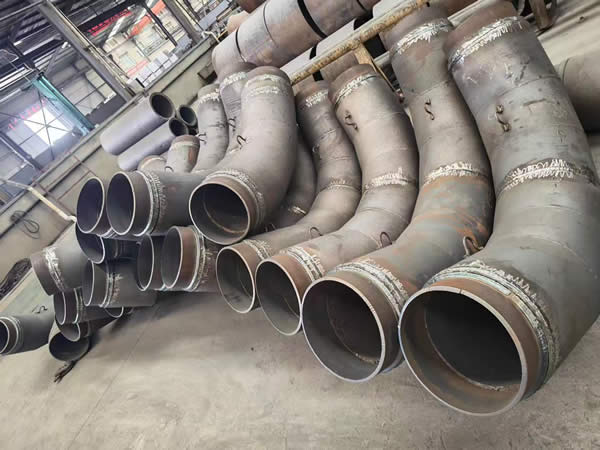
Most buyers select the same material and specification for straight pipes, elbows, and tees, which is extremely unreasonable. Wear-resistant elbows bear 3–6 times higher impact and scouring than straight pipes in aggregate and slurry conveying systems. Using identical accessories leads to premature elbow damage, frequent shutdown replacements, and increased maintenance costs. The correct solution is graded matching: adopt high-strength bimetallic or thick ceramic-lined elbows for turning positions, and standard qualified straight pipes for linear conveying sections to balance performance and cost.
5.2 Mistake 2: Prioritizing Low Price Over Regional Climate Adaptation
Many procurement teams only compare unit prices and ignore climate adaptation parameters. Low-cost generic pipes without UV resistance fail rapidly under Middle East strong sunlight; pipes without salt spray anti-corrosion treatment rust thoroughly within one year in Southeast Asian coastal areas. Short-term procurement savings lead to repeated replacement and production shutdown losses, far exceeding the initial cost difference. The core solution is to take local climate and working media as the primary selection standard, with price as the secondary consideration.
6. Conclusion & Practical Project Takeaways
Selecting a qualified wear-resistant pipe for overseas industrial projects relies on regional climate adaptation, working condition matching, and standardized operation and maintenance. Different materials including ceramic-lined pipe, bimetallic alloy pipe, and rubber-lined pipe have clear scenario boundaries for aggregate and chemical projects. Avoiding high-frequency selection mistakes is the key to reducing pipeline failure rates.
For Southeast Asian salt spray and acidic mud projects, prioritize anti-corrosion and sealed protected pipelines; for Middle East dry heat and sandstorm working conditions, focus on UV and abrasion resistance; for Japan-Korea refined standard projects, strictly comply with local JIS and KS specifications. Graded selection of pipe fittings and targeted regional adaptation can maximize pipeline service life and reduce comprehensive operating costs.
As a professional wear-resistant pipe supplier for Southeast Asia and Middle East industrial projects, we provide customized selection solutions for global aggregate, chemical and port projects, helping overseas B-end teams avoid selection pitfalls and stabilize long-term project operation.